Creative DIY Headboard Ideas for a Bedroom Makeover
We may earn a commission for purchases made using our links. Please see our disclosure to learn more.
A headboard can immediately elevate the look of a bedroom and make it seem more inviting and personalized. A DIY headboard can also be inexpensive and surprisingly simple to create. From painted arches to upholstered panels and wood-slat layouts, there’s a lot of artistic flexibility for all styles, budgets, and skill levels. Even a simple pattern can transform a white wall into a strong focal point. In this article, we’ll help you pick an idea that suits your space and your nerve.
Plan Your DIY Headboard First
Before buying materials, measure both the mattress and the bed frame.
A headboard no wider than the mattress gives a neat, no-fuss look. Extending it 2 to 6 inches past each side adds a sense of massiveness to the design and acts as a permanent custom detail.
Outline the intended design on the wall with painter’s tape. Then step back and look at it from the doorway.
This quick test helps you spot awkward proportions before cutting wood or fabric.
Also check the location of:
- Electrical outlets and switches
- Windows and wall lights
- Baseboards
- Wall studs
- Bedside tables
A few minutes of planning can prevent frustrating adjustments later.
1. Make a Simple Upholstered Headboard
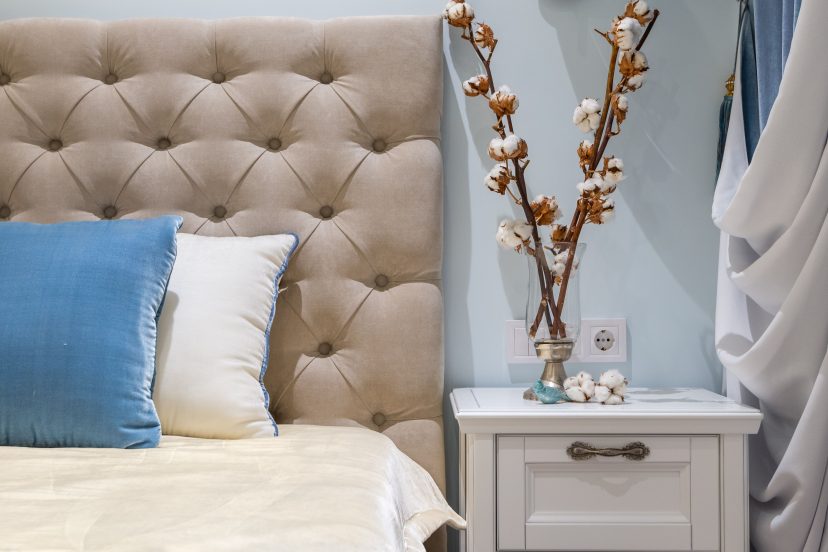
An upholstered panel is one of the most beginner-friendly DIY headboard ideas. It creates a comfortable surface for reading in bed and softens a room filled with hard furniture.
Start with a sheet of plywood. Add upholstery foam, batting, and your chosen fabric.
Different fabrics create different moods:
- Linen-look fabric: relaxed and casual
- Velvet: rich and dramatic
- Performance fabric: durable and easy to clean
Attach the foam to the plywood with spray adhesive. Next, wrap the batting around the panel and secure it at the back.
Add the fabric last. Staple from the center of each side and work toward the corners. This keeps the fabric smooth and evenly tensioned.
For more ways to combine soft textures, gentle colors, and polished accents, explore these soft glam bedroom decorating ideas.
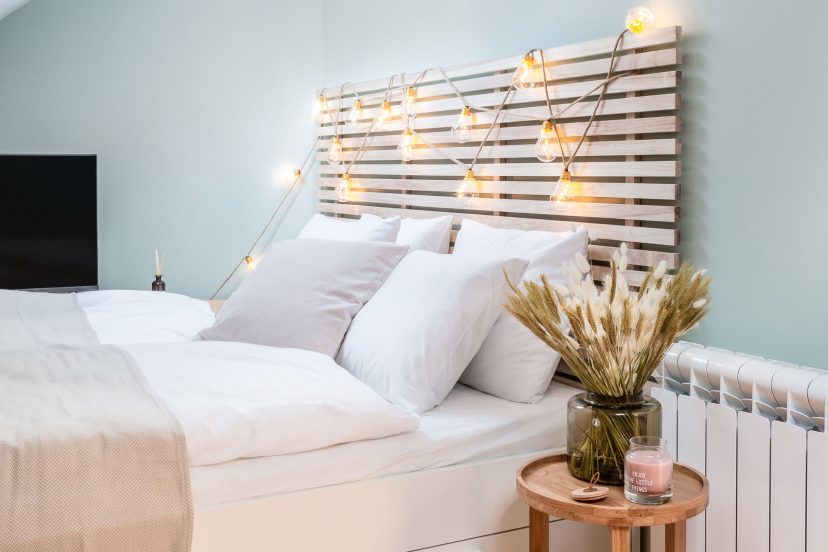
2. Build a Modern Wood-Slat Headboard
A wood-slat headboard adds warmth without making the room feel heavy.
Vertical slats can also draw the eye upward, which may help a low ceiling appear taller.
Attach evenly spaced wood strips to a plywood backing or horizontal support rails. Before assembly, sand all visible edges to remove splinters and rough patches.
You can finish the wood with:
- Natural stain
- Clear protective coating
- Matte paint
- Whitewash
Narrow gaps between the slats create a tailored look. Wider spaces make the design feel lighter and more relaxed.
For easier removal, assemble the slats as one complete panel and hang it with a French cleat. This method is usually simpler than attaching every slat directly to the wall.
3. Create a Reclaimed-Wood Headboard
Reclaimed boards bring natural character into a bedroom. Their varied grain, nail marks, knots, and weathered color make every headboard slightly different.
However, inspect salvaged wood carefully before using it indoors.
Avoid boards with:
- Rot or insect damage
- Strong chemical odors
- Flaking paint
- Unknown industrial coatings
- Deep moisture damage
Arrange the planks on the floor before attaching them. Mix lighter and darker pieces until the layout feels balanced.
Secure the boards to support battens at the back. Then sand the surface gently to remove splinters without erasing its aged appearance.
A matte clear finish can make the wood easier to clean and stop rough fibers from catching on pillows or bedding.
4. Paint an Arched Headboard
A painted headboard is affordable, quick, and ideal for smaller bedrooms. It takes up no floor space and requires no heavy mounting hardware.
Use a level, pencil, string, and painter’s tape to create a rectangle with a rounded top.
Choose a color that supports the mood of the room. For example:
- Muted terracotta adds warmth
- Forest green feels calm and grounded
- Deep blue creates contrast
- Soft beige keeps the room understated
Extend the painted shape slightly beyond the width of the mattress. This helps it look intentional rather than like a random patch of color.
Matching wall sconces or two small shelves can make the design feel even more finished.
It is also a practical choice for rental bedrooms. You can simply repaint the wall before moving instead of transporting a bulky headboard.
5. Try a Cane or Rattan-Inspired Design
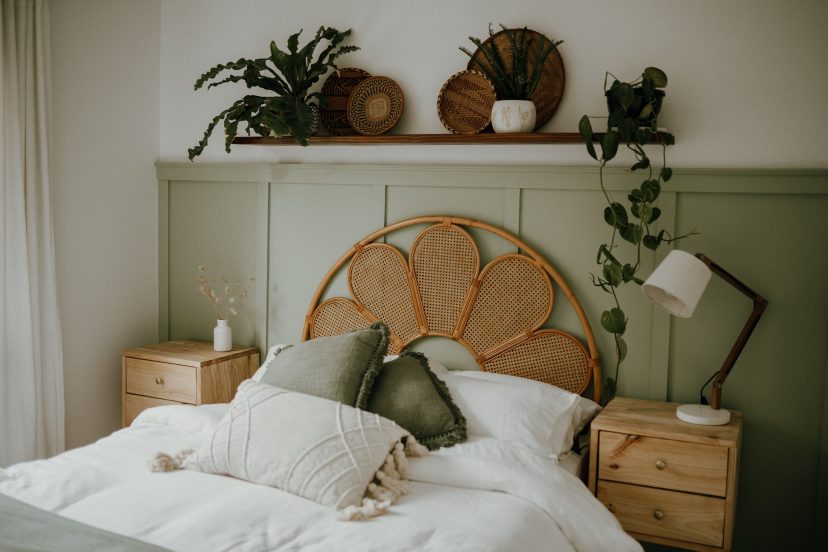
Cane webbing adds texture without visually crowding the bedroom.
Build a slim wooden frame, stretch the woven panel across the opening, and fasten it from the back with staples or narrow trim.
Natural cane may need to be soaked before installation. It tightens as it dries, creating a smoother finish.
Synthetic cane is often easier to handle and may perform better in rooms with changing humidity.
Keep the outer frame simple so the woven material remains the focal point. Pale oak creates a light coastal look, while black or dark-stained wood feels sharper and more modern.
6. Use Peel-and-Stick Panels
Wood-look, fabric, and acoustic panels can create the appearance of a headboard without traditional construction.
They work especially well behind platform beds or in compact rooms where a thick panel would take up valuable space.
Always test one panel first. Adhesives react differently to smooth, textured, dusty, or recently painted walls.
Clean and prepare the surface according to the manufacturer’s directions. Then use a level while installing each row.
You can also add thin molding around the finished section. Match the molding to the panels for a built-in appearance, or use a contrasting shade to outline the shape.
7. Arrange Modular Cushioned Panels
Padded squares or rectangles can turn the wall behind your bed into a soft, contemporary feature.
Create each panel using thin plywood, foam, batting, and fabric. Then mount the finished pieces in an evenly spaced grid.
Using one fabric color creates a calm, hotel-inspired look. Combining two related shades adds depth without making the design too busy.
Before drilling or mounting anything, create paper templates and tape them to the wall. Small spacing mistakes become very noticeable in a geometric layout.
Removable mounting hardware can also make individual panels easier to clean, repair, or replace.
Choose Bedroom-Friendly Materials
A headboard sits close to your face for several hours each night, so choose materials carefully.
A 2023 study on bedroom air quality and sleep found that higher levels of carbon dioxide, fine particles, heat, and noise were associated with lower sleep efficiency.
When using paint, stain, adhesive, or sealant, keep the workspace well ventilated. Let the finished headboard dry and cure completely before installing it near the bed.
The EPA’s guidance on VOCs and indoor air quality also explains that paints, adhesives, coatings, and furnishings may release pollutants indoors.
Choose low-emission products where possible. For upholstered designs, select fabric that you can vacuum or spot-clean easily.
Finally, sand wood edges until smooth and seal rough or porous surfaces before bringing the headboard into the bedroom.
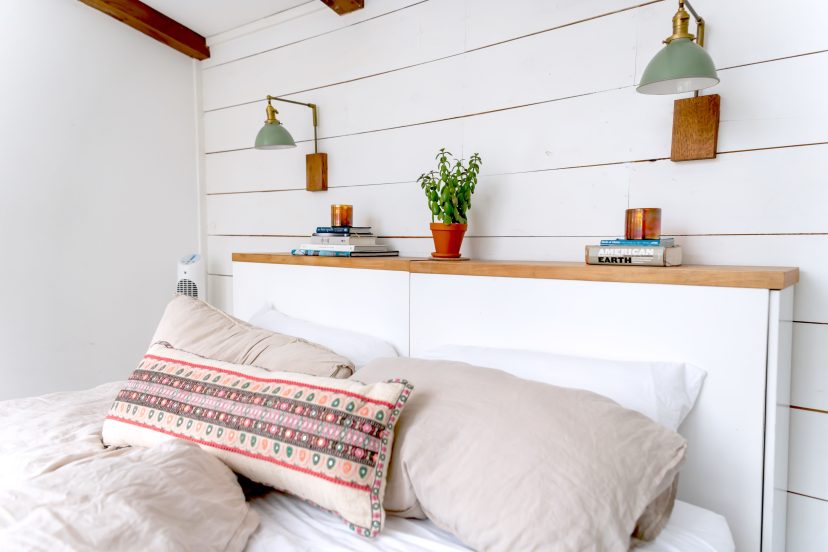
Mount the Headboard Securely
Heavy wall-mounted headboards should connect to wall studs whenever possible.
French cleats work well because they distribute weight across a wider area and keep the panel close to the wall.
For a bed-frame-mounted design, use bolts that fit the frame properly. Leave enough clearance above the baseboard and tighten the hardware evenly so the headboard does not lean or twist.
Avoid using lightweight picture-hanging strips for large plywood or solid-wood panels.
After installation, press gently against several areas. The headboard should not sway, lift, rattle, or pull away from the wall.
Check the hardware again after a few days. Wood, foam, fabric, and padding may settle slightly after regular use.
Must-Have DIY Headboard Materials and Tools
1. Arrow T50 Heavy Duty Staple Gun Kit
The Arrow T50 Heavy Duty Staple Gun Kit is useful for securing fabric and batting to the back of plywood. It includes multiple staple sizes, making it suitable for upholstered headboards and other home improvement projects.
Best for: Fabric and upholstery work
2. AK TRADING CO. Upholstery Foam
The AK TRADING CO. 2-Inch Upholstery Foam Sheet provides a soft, cushioned layer for padded headboards. Measure the plywood before ordering. A queen- or king-size design may require more than one sheet.
Best for: Comfortable upholstered panels
3. Fairfield Poly-Fil Low-Loft Batting
The Fairfield Poly-Fil Low-Loft Batting helps soften the edges of upholstery foam and creates a smoother surface beneath the fabric. Wrapping it around the sides also prevents the finished panel from looking too square or uneven.
Best for: Smoothing foam and edges
4. French Cleat Hanger
The French Cleat Hanger can support items such as mirrors, wall panels, artwork, and some headboards. Always match the mounting system to the wall type and total weight of the completed project.
Best for: Removable wall-mounted panels
5. BLACK+DECKER 5-Amp Jig Saw
The BLACK+DECKER BDEJS600C Jig Saw has variable-speed settings for curved plywood shapes and decorative cuts. Use a blade made for your chosen material. Clamp the board securely and wear eye protection while cutting.
Best for: Arches and custom shapes
Conclusion
A successful DIY headboard does not need to be complicated or expensive. A painted arch can transform a blank wall in one afternoon. Upholstered panels add comfort, while wood slats and reclaimed boards create a more permanent focal point. Choose a design that suits your tools, budget, and daily habits. Measure carefully, test the proportions, select bedroom-friendly materials, and secure the finished piece properly. Those simple details can turn an ordinary weekend project into a bedroom upgrade that looks polished and intentional.
FAQs
What is the easiest DIY headboard to make?
A painted wall arch is one of the easiest options because it requires no woodworking. A fabric-covered plywood panel is also beginner-friendly.
What material works best for a DIY headboard?
Plywood works well for upholstered designs, while wood slats, cane, paint, and adhesive panels suit different styles and budgets.
How wide should a headboard be?
It can match the mattress width or extend 2 to 6 inches beyond each side for a more substantial look.
Can I make a headboard without drilling?
Yes. Try a painted design, a bed-frame-mounted panel, or a properly supported freestanding headboard.
How can I make a DIY headboard look expensive?
Use even spacing, smooth edges, hidden hardware, and neatly finished fabric or wood.