It’s All In The Details: Coffee Table Arrangement Ideas
We may earn a commission for purchases made using our links. Please see our disclosure to learn more.
A well-planned coffee table arrangement can change how your living room looks and functions. Because the coffee table sits at the center of daily life, its setup affects both comfort and visual balance. Too much clutter makes the room feel busy, while too little can leave it looking unfinished. The right arrangement brings structure, style, and ease into the space. This guide breaks down simple, practical ideas to help you style your coffee table in a way that feels intentional, usable, and visually calm.
Coffee Table Arrangement: Where Function and Style Meet
A coffee table serves more than one purpose. It holds everyday items like drinks, remotes, and books, while also shaping how the living room looks and feels.
When the table is cluttered, the room feels busy. When it’s too empty, the space can feel unfinished. A balanced coffee table arrangement helps the room feel organized, comfortable, and complete.
Small changes make a difference. Leaving open space, grouping items, or adjusting the height of decor can quickly improve both function and appearance. When style supports everyday use, the coffee table becomes a practical focal point rather than a distraction.
How Visual Clutter Affects Mental Well-Being
A large research study published on ScienceDirect examined the relationship between home clutter and psychological well-being. Researchers found that people living in more cluttered, visually busy spaces often reported lower overall well-being and higher negative emotions.
One important insight from this study was that perceived beauty of a space plays a key role. When people felt their environment looked organized and visually pleasing, their reported stress levels were lower and their sense of comfort was higher. In simple terms, when a space feels “put together,” the mind tends to feel more at ease.
This supports the idea that thoughtful coffee table arrangement—leaving breathing room, limiting excess decor, and creating balance—can contribute to a calmer living environment rather than visual overload.
Why Furniture Layout and Visual Quality Matter Indoors
Another comprehensive systematic review of over 50 studies looked at how indoor environments affect mental well-being, satisfaction, and cognitive comfort. The review found consistent connections between interior layout, furniture arrangement, and visual quality and how people feel inside a space.
Well-organized environments were linked to:
- Improved mood
- Greater satisfaction with the home
- Better mental clarity and comfort
While the review covered entire rooms rather than individual surfaces, it reinforced a key idea: how objects are arranged matters just as much as what objects are present. Visual order helps the brain process a space more easily, reducing mental strain.
This aligns closely with coffee table styling principles like using fewer items, varying heights, and grouping decor intentionally. A table that feels balanced supports the same sense of order researchers associate with positive indoor experiences.
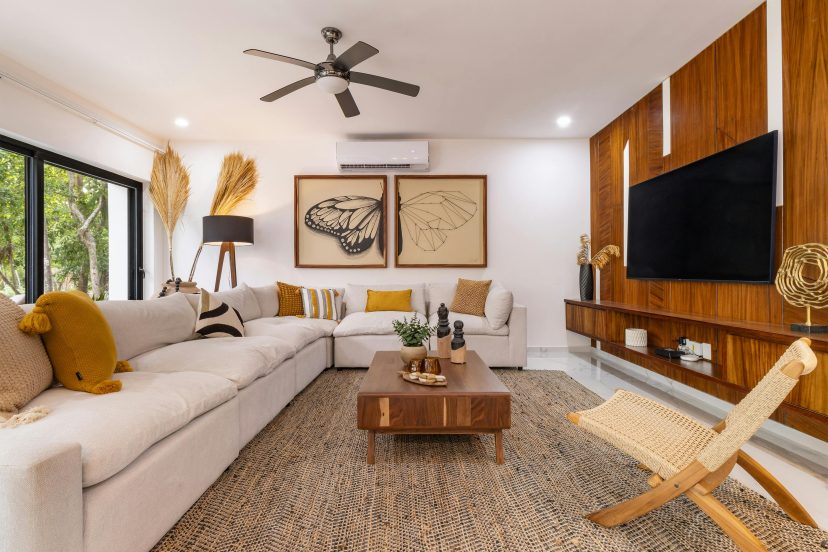
Start With Function Before Style
Before decorating, consider how you use your coffee table day to day.
Ask yourself:
- Do people eat or drink here often?
- Do you need space for board games or laptops?
- Is it a high-traffic area?
Function should always come first. A beautiful setup that gets in the way won’t last. Leave enough open space so the table remains useful. Styling should support your life, not fight it.
A good rule is to leave at least one clear area where someone can comfortably place a drink or snack.
The Basic Rules of a Good Coffee Table Arrangement
You don’t need to memorize design rules, but a few guidelines help things feel natural.
Balance Matters More Than Matching
Perfect symmetry can feel stiff. Instead, aim for visual balance. Spread items so one side doesn’t feel heavier than the other. Different shapes and sizes help create this balance without looking forced.
Keep Heights Varied
When everything sits at the same height, the table looks flat. Mix low, medium, and slightly taller items. This guides the eye and adds interest.
Edit Ruthlessly
Less is almost always better. If something doesn’t add function or beauty, remove it. Space is part of the design.
Choosing the Right Decor Pieces
Not every decorative item works on a coffee table. The best pieces feel intentional and practical.
Good coffee table decor often includes:
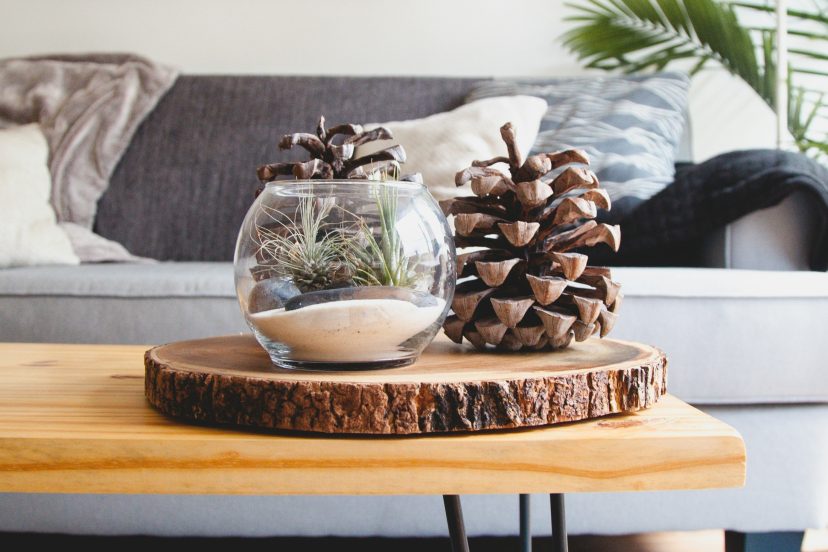
- A tray to anchor items
- Books for height and personality
- A small decorative object
- Something organic, like greenery
- One warm element, such as a candle
Avoid items that are too tall or fragile. They block views and get in the way during everyday use.
The Rule of Three (And Why It Works)
You’ll often hear designers talk about the rule of three. It works because odd numbers feel more natural to the human eye.
Grouping three items creates movement and keeps the setup from feeling staged. The key is variety. Use different heights, shapes, or textures.
For example:
- A short stack of books
- A small bowl or object
- A candle or vase
Together, they feel balanced and relaxed.
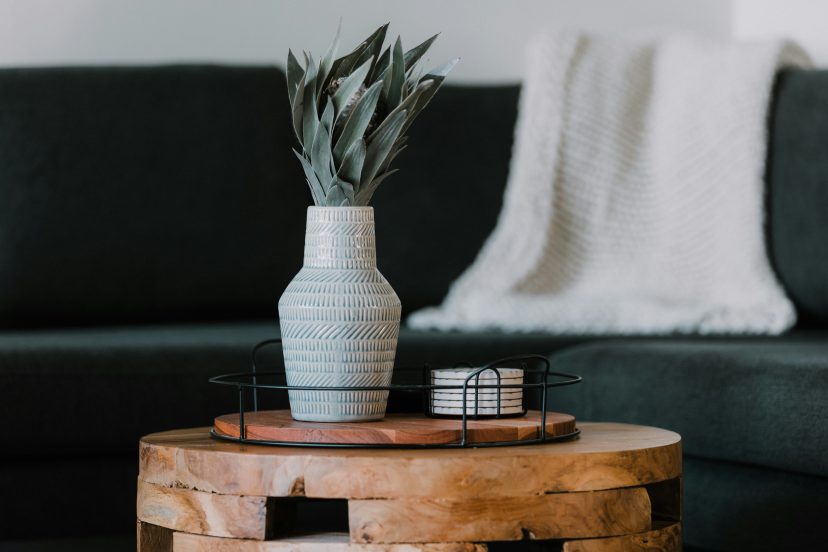
Using Trays to Create Structure
A tray is one of the easiest ways to improve a coffee table arrangement.
It groups items together and gives them purpose. Trays also make cleaning easier because you can move everything at once.
Wood trays add warmth. Metal trays feel modern. Neutral colors work best because they don’t compete with other decor.
Just make sure the tray isn’t too large. You still want open space around it.
Mixing Textures for a Rich Look
Texture adds depth, even when colors stay neutral.
Try combining:
- Smooth ceramics with rough wood
- Glass with woven materials
- Matte finishes with subtle shine
These contrasts keep the table visually interesting without adding clutter. Texture is especially important if your color palette is simple.
Choosing Colors That Feel Calm
A coffee table arrangement should support the room’s color scheme, not fight it.
Pull one or two colors from nearby furniture, pillows, or artwork. Repeat them softly through books, candles, or small objects.
Neutral bases work well, especially in shared living spaces. You can always add color seasonally if you want variety.
Seasonal Coffee Table Arrangement Ideas
Changing your coffee table with the seasons keeps the space feeling fresh.
Spring
Use light colors, fresh flowers, and simple shapes. Keep things airy.
Summer
Natural textures shine here. Think wood, greenery, and relaxed styling.
Fall
Add warmth with darker tones, textured objects, and cozy accents.
Winter
Candles, deeper colors, and layered pieces help create a cozy feel.
You don’t need to replace everything. Swapping one or two items is enough.
Minimalist vs. Layered Styling
Either approach can work well, depending on the space. The choice depends on your space and personality.
Minimalist arrangements use fewer items and more open space. They work well in modern or small living rooms.
Layered arrangements feel cozy and collected. They suit relaxed or eclectic homes. The trick is editing so it doesn’t feel crowded.
If you’re unsure, start minimal. You can always add more later.
Recommended Products
These versatile items work with many styles and layouts:
- Decorative Wooden Coffee Table Tray – Helps organize items and adds warmth.
- Neutral Coffee Table Book Set – Adds height, interest, and personality.
- Ceramic Decorative Bowl – Great for texture and subtle contrast.
- Modern Candle or Candle Holder – Brings warmth and soft lighting.
- Small Faux Plant or Greenery Accent – Adds life without maintenance.
Each item supports both function and visual balance.
Final Thoughts
A balanced coffee table arrangement supports everyday use and the overall look of your living room. When you focus on function, keep clutter low, and choose a few intentional pieces, the table feels organized and comfortable. Small changes such as adjusting height, grouping items, or removing extra decor can make a clear difference. When style and function work together, the coffee table becomes a natural focal point that helps the entire room feel complete. If you are working with a small space, color and visual balance also matter and you can learn more about that in this guide on small bathroom paint ideas.
FAQs
How many items should be on a coffee table?
Most tables look best with three to five items, depending on size.
Should a coffee table be symmetrical?
No. An uneven layout usually looks more comfortable and effortless.
Are plants good for coffee table decor?
Yes. Small plants or greenery add life without clutter.
What is the ideal height for items on a coffee table?
Most decor should stay low enough so it does not block your view when you are sitting.
How often should you refresh your coffee table setup?
Seasonal refreshes or small changes every few months work well.