Backyard Fence Designs for Small Yards
We may earn a commission for purchases made using our links. Please see our disclosure to learn more.
Even a tiny yard can feel private, airy, and welcoming with the right fence. It’s just a matter of finding a style that offers a sense of security without making the space feel cramped. These functional backyard fence designs can help you reclaim your privacy, complement your home, and even make a tight outdoor space feel more open.
Why Fence Design Matters in a Small Yard
A fence occupies little space, yet it significantly impacts the look and feel of your yard. This visual effect is even more pronounced where outdoor space is small.
Tall, solid panels are good for privacy, but can also block sunlight and air circulation. Solid fencing feels heavier, even though it can protect patios and seating areas from the elements. Privacy should be balanced with openness in the right backyard fence designs.
Before choosing a style, decide what you need the fence to accomplish. Your priorities might include:
- Blocking views from neighboring properties
- Keeping children or pets safely inside
- Improving security
- Supporting climbing plants
- Concealing bins or equipment
- Creating an attractive garden backdrop
Once you identify your main priority, choosing a suitable fence becomes much easier.
Slim Vertical Slat Fencing
Vertical slats draw the eye up, which can make a short or narrow yard feel taller. The clean lines work well in both traditional and modern homes.
If you don’t care about total privacy, leave the occasional little gap between boards. They let light and fresh air in, while keeping a clear perimeter.
Vertical fencing is especially effective behind a thin row of plants. Vertical lines are repeated with ornamental grasses, upright flowers and columnar evergreens that don’t take up much room on the ground.
Use plain posts and hidden fasteners whenever possible. Giant ornamental columns can overwhelm a tiny yard and weigh down the fence.
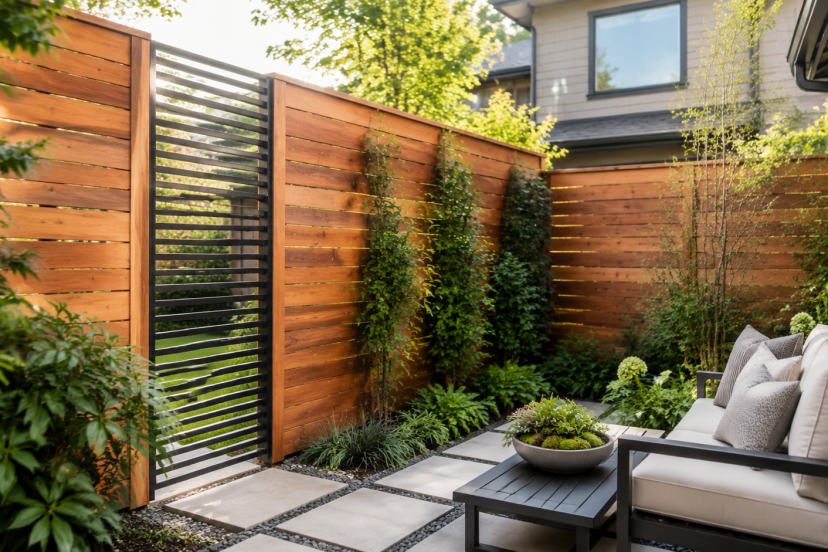
Horizontal Wood Fencing
Horizontal boards draw the eye across the property, helping a narrow backyard appear wider. This makes horizontal fencing one of the most attractive backyard fence designs for compact gardens.
Cedar provides a warm, contemporary finish, while pressure-treated lumber is generally more affordable. Leaving narrow gaps between the boards can soften the wall-like appearance and improve airflow.
Horizontal fences need adequate structural support. Long boards may sag if the posts are too far apart. Ask an experienced installer to recommend the correct spacing for your lumber, soil, and local wind conditions.
If you are planning a larger outdoor project, our guide to a complete backyard transformation offers useful ideas for defining zones, adding plants, and improving a small space.
Lattice-Top Privacy Fencing
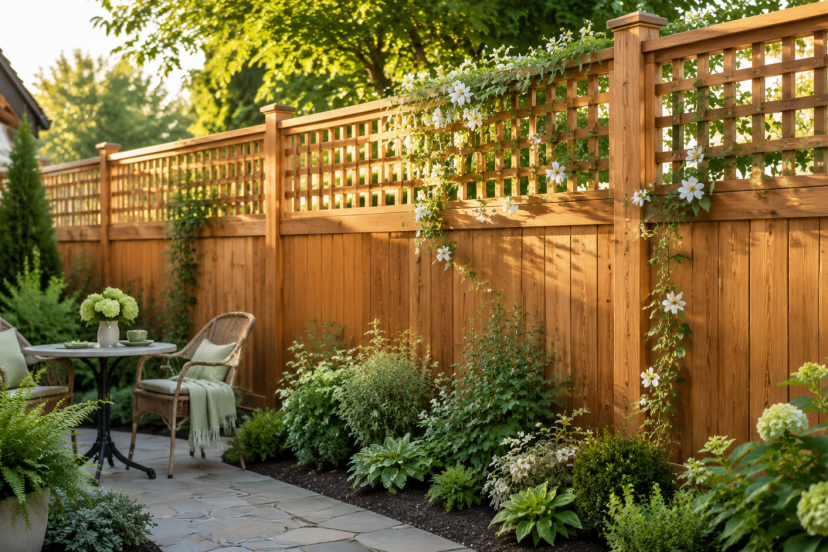
Lattice-top fencing offers privacy without creating a completely solid boundary. The lower panels block direct views, while the open upper section allows daylight and air to reach the yard.
Square or diagonal lattice complements traditional homes. Narrow horizontal lattice creates a cleaner, more modern appearance. You can leave the upper section open or use it to support a lightweight climbing plant.
Avoid aggressive vines that may become heavy or push through the boards. Instead, select a manageable plant suited to your climate, sunlight, and maintenance routine.
The NC State Extension landscape design guide recommends selecting plants according to the conditions of the site. This matters in a small yard, where each planting area must be used carefully.
Mixed-Material Fence Designs
Combining materials can make a long boundary more visually interesting. Wood and black metal work especially well together because the wood adds warmth while the metal keeps the structure feeling open.
For example, install solid wood panels around a patio and use open metal fencing near flower beds. This gives you privacy where you need it without surrounding the entire property with solid panels.
Other appealing combinations include:
- Cedar boards with dark steel posts
- Wood panels above a low masonry wall
- Corrugated metal framed with timber
- Composite boards with aluminum rails
- Horizontal slats between brick columns
Keep the colors and finishes simple. Too many competing materials can make a compact backyard look cluttered.
Living and Vertical Garden Fences
A fence can provide planting space as well as privacy. Wall planters, hanging pots, narrow trellises, and planting pockets let you introduce greenery without reducing the size of your patio or lawn.
Herbs, strawberries, compact flowers, and trailing plants work well in vertical containers. Before installing them, confirm that the fence can support the weight of the containers, wet soil, and mature plants.
For additional inspiration, explore these ideas for maximizing an outdoor space. Our guide covers vertical gardening, multipurpose features, and lighting solutions for smaller yards.
Remember that living screens need time to fill out. If you want immediate coverage, combine a trellis with a partial privacy panel while the plants grow.
Decorative Metal Fencing
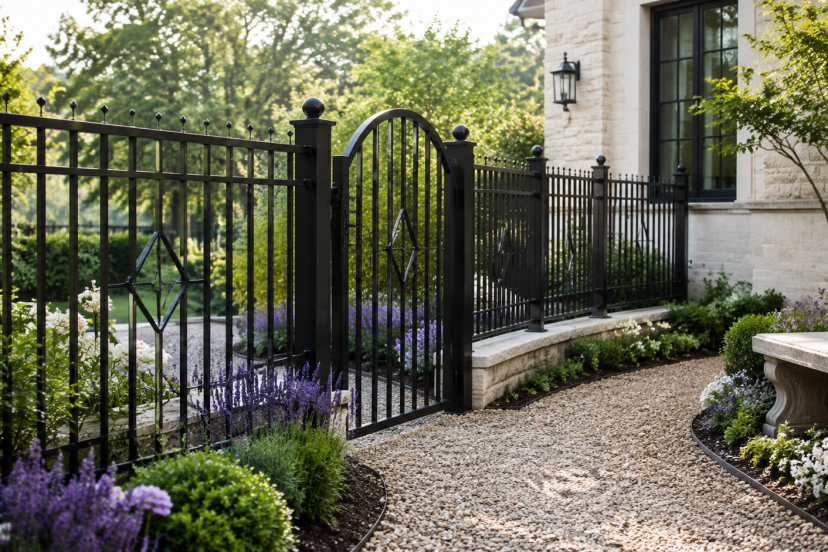
Black aluminum or steel fencing defines the property without blocking the view. Because you can see through the rails, the landscape appears to continue beyond the boundary.
This design works best when privacy is not the main concern or when existing shrubs provide natural screening. It can also suit front-facing sections where local regulations limit solid fencing.
Choose narrow rails and simple details. Elaborate scrollwork may appear too busy in a compact setting, while clean lines create a calmer background for plants and outdoor furniture.
Choosing a Material for a Compact Backyard
The right material for backyard fence designs depends on your budget, climate, preferred appearance, and willingness to perform maintenance.
Wood
Wood has a natural appearance and can be painted or stained to complement almost any home. However, it needs periodic cleaning and sealing. Good drainage around the posts will help prevent early deterioration.
Composite
Composite fencing offers a consistent finish and requires less maintenance than wood. It usually costs more initially, but it does not need regular staining. Follow the manufacturer’s installation instructions because some boards expand and contract.
Vinyl
Vinyl resists rot and does not require painting. Pale vinyl can brighten a shaded yard, although low-quality panels may look bulky or become brittle over time.
Metal
Aluminum and steel create slim profiles that work well in modern gardens. Aluminium is corrosion resistant and light in weight. Steel is stronger, but it needs a durable protective coating to prevent rust.
Fence Colors That Make a Small Yard Feel Bigger
Fence color affects how open or enclosed your backyard feels. White, pale gray, beige, and natural wood tones reflect light and can brighten a compact space.
Dark colors may also work well. A charcoal or black fence often recedes behind green foliage instead of becoming the yard’s main feature. This creates a sense of depth and allows plants to stand out.
Connect the fence color to another outdoor element, such as the home’s trim, deck, planters, or furniture. Repeating one finish helps the house and yard feel coordinated.
Balancing Privacy, Light, and Airflow
You may not need a solid six-foot fence around the entire property. Begin by identifying the specific views you want to block. A taller section beside a patio or dining area may provide enough privacy without enclosing every boundary.
Options that maintain light and airflow include:
- Spaced vertical boards
- Slatted privacy screens
- Lattice extensions
- Staggered boards
- Trellises with vines
- Open fencing combined with shrubs
Alternating open and solid sections may also reduce wind pressure. However, structural requirements depend on local conditions. Consult a qualified professional if your property is exposed to strong winds or severe storms.
Recommended Products for Backyard Fence Projects
These products can add privacy, greenery, or lighting to an existing fence. Check current dimensions and specifications before ordering.
- UPGRADE 6-by-50-Foot Privacy Fence Screen – This mesh screen adds coverage to chain-link and other open fencing while allowing some air to pass through.
- DOEWORKS Expandable Faux Ivy Trellis – This expandable trellis adds decorative greenery where maintaining a living vine may not be practical.
- Expandable Faux Ivy Fence – Its adjustable design can screen a patio corner, short fence section, or utility area.
- SunFlickt Solar Fence Lights – These solar lights improve nighttime visibility without requiring permanent electrical wiring.
- SUNWIND Solar Post Cap Lights – These lights add a warm glow to compatible wooden posts and help define the yard after dark.
Conclusion
Top small yard backyard fence designs offer a mix of privacy, style and airiness. Whether you like horizontal boards, vertical slats, lattice panels, or a living fence made of greenery, pick a style that fits your space and works well with your home. With a bit of know-how, the right materials and a few finishing touches, your fence can turn even a small backyard into a welcoming, finished and inviting space.
FAQs
What type of fence is best for a small backyard?
Vertical slats, horizontal boards, and fences that combine solid and open sections work well. Choose according to the privacy, sunlight, and airflow your yard needs.
How can I make a small fenced yard look larger?
Use long fence lines, consistent colors, narrow planting beds, and upright plants. Light finishes brighten shaded areas, while dark fencing can recede behind greenery.
How tall should a backyard privacy fence be?
Many residential privacy fences are around six feet tall, but regulations vary. Check local height limits, setbacks, and homeowners’ association rules first.
What is the most affordable way to improve fence privacy?
Adding privacy mesh to a suitable existing fence is often less expensive than replacing it. Trellises, container plants, and freestanding screens are other affordable options.
Should a fence match the house?
It does not need to match exactly, but it should coordinate with the home. Repeating a trim color, wood tone, or metal finish creates a more connected appearance.