Simple Curb Appeal Ideas for a Beautiful Front Yard
We may earn a commission for purchases made using our links. Please see our disclosure to learn more.
Your front yard shapes the first impression of your home. Simple updates like cleaner edges, healthier plants, better lighting, and a more inviting entrance can make a noticeable difference. These curb appeal ideas focus on practical improvements that help your home look polished without requiring a major renovation. Small changes often have more impact when they work together. The goal is to create a front yard that feels neat, balanced, and easy to maintain.
Start With a Clean, Uncluttered Front Yard
Before buying plants or outdoor decor, clean the areas that are already visible.
Pull weeds, remove dead leaves, trim damaged branches, sweep the walkway, and move garden tools or unused pots out of sight. Wash dirty porch surfaces and clean the lower part of the siding if it has collected dust or mildew.
This gives you a clearer view of the yard and helps you identify what actually needs improvement.
Pay particular attention to the route from the sidewalk or driveway to the front door. Visitors notice this area first, so keeping it clear can improve the overall impression immediately.
Define Walkways and Garden Edges
Sharp edges make a yard look more organized.
When grass grows into flower beds or mulch spreads onto the walkway, even healthy landscaping can appear neglected. Use a spade or edging tool to redefine the border between lawn, soil, mulch, and paving.
Refresh mulch where it has faded or thinned, but avoid piling it against tree trunks or plant stems. A moderate layer helps control weeds and gives planting beds a more finished appearance.
Check the walkway as well. Remove weeds growing through joints, reset loose pavers, and clean stained surfaces when needed.
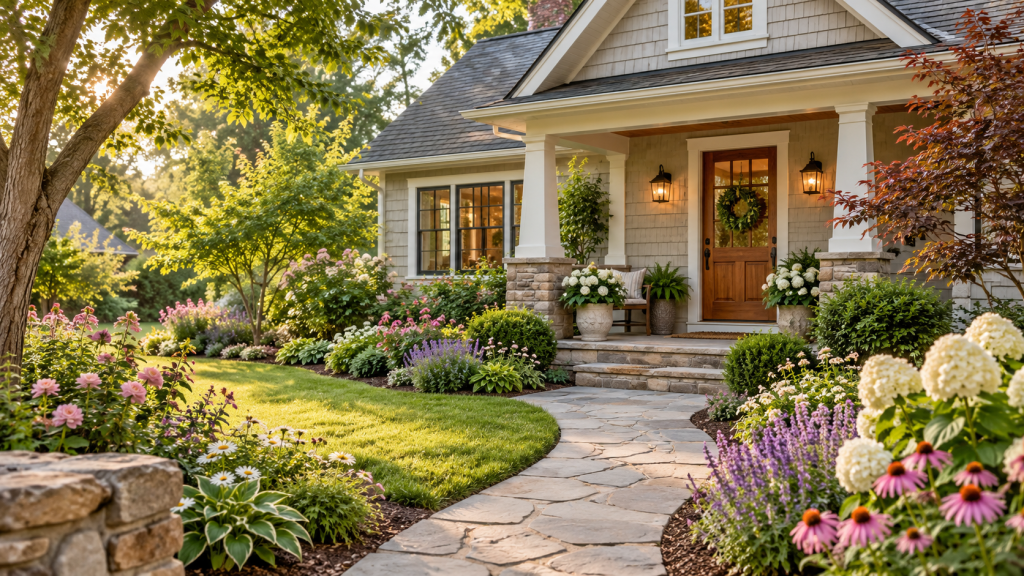
A clearly defined path does more than improve appearance. It helps guide the eye toward the front door.
Make the Front Door the Focal Point
The front door should be easy to find from the street.
If it blends into the exterior, a fresh coat of paint may be enough to create contrast. Deep green, navy, muted red, charcoal, and warm neutral tones can work well, depending on the surrounding siding, brick, stone, and trim.
Avoid choosing a color without considering the rest of the exterior. The door should stand out without looking disconnected from the house.
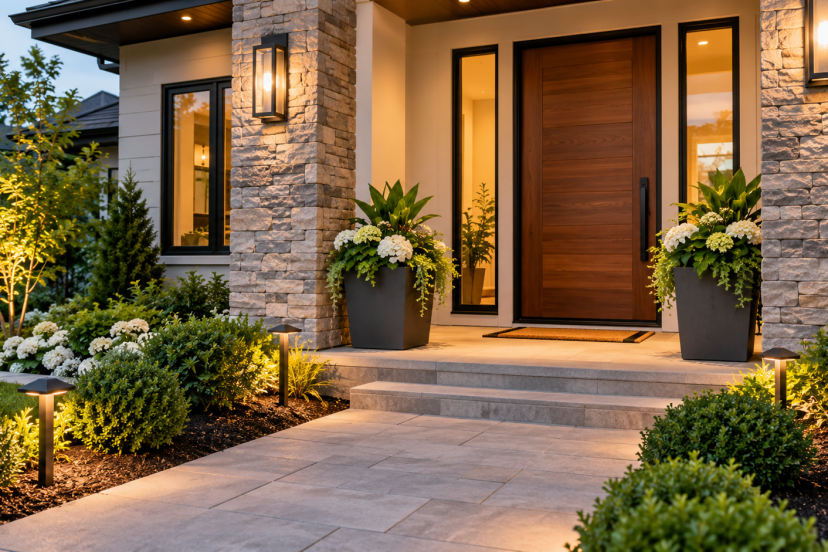
Add one or two finishing touches, such as a substantial planter, simple wreath, attractive doormat, or updated porch light.
You can continue the same welcoming feel indoors with these entryway ideas for making a home feel more inviting. Keeping the exterior and interior entrance visually connected often makes the arrival experience feel more intentional.
Use Plants to Frame, Not Hide, the House
Plants should support the architecture rather than cover it.
One common mistake is buying shrubs based on their current size. A plant that looks small at the nursery may eventually block a window, crowd a walkway, or grow against the siding.
Consider the plant’s full-grown size before placing it. Use larger shrubs or evergreen plants for structure, then add smaller perennials, grasses, or seasonal flowers around them.
Repetition can also make landscaping look more polished. Using the same plant in several areas often creates a stronger design than filling every space with a different variety.
Select plants that suit the conditions in your yard. The University of Minnesota Extension’s landscape planning guidance recommends considering factors such as sun exposure, soil, available space, and site conditions when selecting landscape plants.
Matching plants to the right location reduces maintenance and helps the yard look healthier over time.
Add Outdoor Lighting With a Purpose
Exterior lighting should improve visibility while supporting the design of the yard.
Start with the front steps, entrance, walkway, and house numbers. These areas benefit most from added light.
A warm porch fixture can make the doorway feel more welcoming, while low pathway lights help people move safely from the sidewalk or driveway. Solar lights can work well where running electrical wiring is impractical, provided the panels receive enough sunlight during the day.
Avoid placing lights randomly across the lawn. A few well-positioned fixtures usually look better than a large number of poorly planned ones.
For more ways to combine lighting, planting, and usable exterior spaces, these outdoor living ideas provide additional inspiration.
Upgrade House Numbers and Small Hardware
House numbers, door handles, mailboxes, and porch fixtures are easy to overlook, but they can make the entrance feel dated.
Replace faded or undersized house numbers with a style that complements the architecture. Keep the numbers clearly visible from the road.
You can also update worn door hardware or an aging mailbox if the existing pieces no longer suit the exterior.
Finishes do not need to match perfectly, but they should look related. Black, bronze, brushed nickel, and warm brass can all work when used consistently.
Visibility should still come before style. House numbers need to be practical for guests, delivery drivers, and emergency services.
Keep the Lawn Simple and Healthy
A front lawn does not need to look perfect to support good curb appeal.
Regular mowing, clean edges, and healthy coverage matter more than achieving flawless color.
If grass repeatedly fails in one area, look at the cause before reseeding. Shade, compacted soil, poor drainage, heavy foot traffic, or tree roots may make lawn grass unsuitable there.
Replacing a struggling patch with groundcover, mulch, gravel, or a planting bed can look better and require less maintenance.
A front yard should work with the site rather than force every area into the same design.
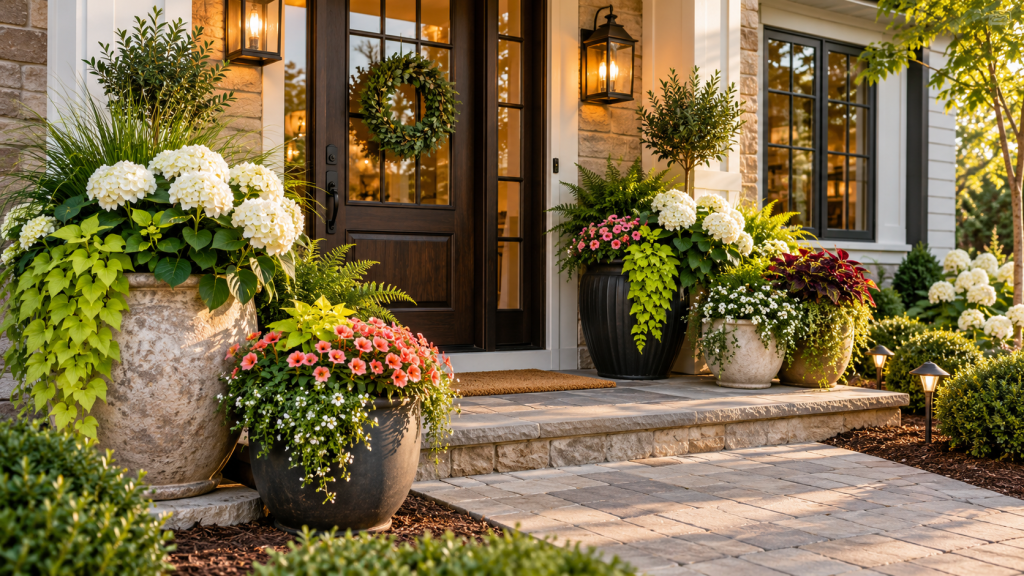
Use Containers for Fast Color
Containers are useful when you want to update the entrance without changing existing planting beds.
One large planter beside the door can add height and color. Two matching planters work well on wider or symmetrical entrances.
Larger containers generally look more intentional than several small pots scattered across the porch.
Pair plants that thrive under similar light and moisture levels. You can also combine long-lasting foliage with seasonal flowers so the display is easy to update throughout the year.
Research supports the value of thoughtful landscape design. A Virginia Tech review of landscaping and perceived property value found that landscape design and plant size influenced how people valued residential properties. More developed landscaping tended to receive higher perceived values than minimal planting.
The practical lesson is simple: thoughtful placement matters more than filling the yard with extra plants.
Recommended Products for Easy Curb Appeal Updates
GIGALUMI Solar Pathway Lights
GIGALUMI solar pathway lights can help define a walkway without requiring electrical wiring. They work best in areas that receive enough direct sunlight during the day. Warm-white lighting usually creates a softer look around entrances and garden paths.
Gorilla Grip WeatherMax Doormat
A clean outdoor mat helps finish the front entrance while reducing the amount of dirt carried indoors. The Gorilla Grip WeatherMax uses a low-profile design made for indoor and outdoor entryways. Pick a size that suits the scale of your entrance.
Hillman Distinctions House Numbers
Hillman Distinctions house numbers are available in several styles and finishes, including floating-mount options. They offer a simple way to update an older entrance while improving visibility from the street.
Kante Tall Concrete Planter
A tall Kante planter adds height beside a front door or porch. Its simple concrete-style finish works particularly well with modern and transitional exteriors. One larger planter can often make more impact than several smaller pots.
Bloem Ariana Self-Watering Planter
The Bloem Ariana is a lighter option for porch plants and seasonal displays. Its built-in reservoir can help maintain moisture between waterings, although watering frequency still depends on climate, plant choice, and sun exposure.
A Few Curb Appeal Mistakes to Avoid
Adding too many decorative elements can make a front yard feel crowded.
Avoid filling the porch with small signs, lanterns, pots, and ornaments that compete for attention. It is often better to choose a few larger elements and leave some open space.
Scale matters as well. Small planters may disappear beside a large entrance, while oversized shrubs can overwhelm windows and walkways.
Do not overlook basic maintenance either. Peeling paint, dead plants, dirty paving, or broken edging will usually attract more attention than new decor.
Fix visible problems before adding new features.
Conclusion
Improving curb appeal does not require changing everything at once. The strongest results usually come from making the front yard cleaner, easier to navigate, and more visually balanced. Defined garden edges give the landscape structure, healthy plants frame the house, lighting makes the approach safer, and small updates such as house numbers, planters, or a refreshed front door help the entrance feel complete. Start with the area that looks most neglected from the street, improve it, and then move closer to the front door. When each change supports the architecture and the way the space is used, the yard feels more welcoming without becoming overdesigned.
FAQs
What is the most affordable way to boost curb appeal?
Start with cleaning and maintenance. Pull weeds, trim plants, edge the lawn, sweep walkways, remove clutter, and refresh mulch before buying new items.
Which curb appeal ideas make the biggest difference?
Focus on the entrance, landscaping, walkway, lighting, and overall cleanliness. These areas shape most of the first impression.
How can I improve curb appeal without replacing plants?
Prune overgrown growth, remove dead branches, redefine garden edges, refresh mulch, and add one or two containers for color.
Do solar lights improve curb appeal?
Yes. Use them along walkways, steps, and garden edges where they provide useful light. Avoid placing too many across the lawn.
How often should I refresh my front yard?
Perform basic maintenance throughout the year and review larger details seasonally. Replace dead plants, clean surfaces, trim shrubs, and update containers when needed.