Top 10 Paint Edgers
We may earn a commission for purchases made using our links. Please see our disclosure to learn more.
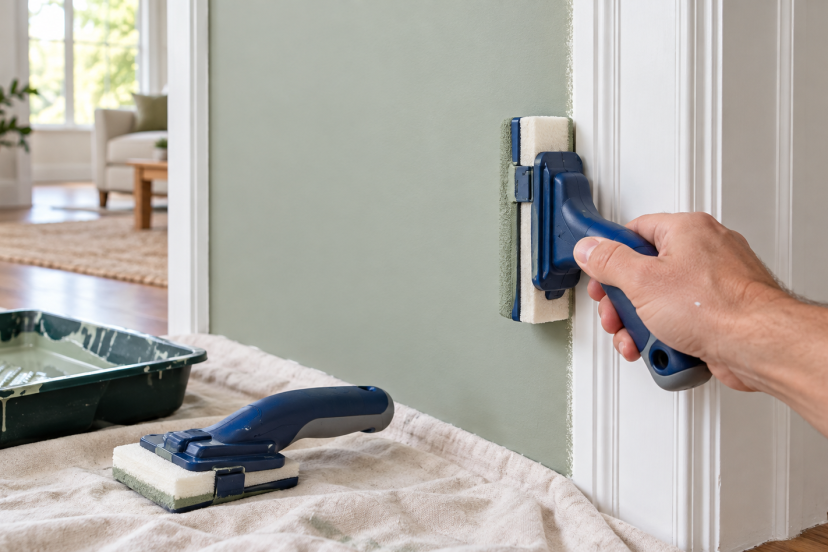
The long wall is usually the easy part. It’s the line beside the ceiling, baseboard, or doorframe that can slow a painting project down. The best paint edgers help you cover those boundaries with more control, whether you prefer a guided pad, a small roller, or a brush you can steer by hand. This guide covers ten tools for different jobs, including a shield and painter’s tape for edges that a pad cannot handle well. The stars below are editorial suitability ratings, not Amazon customer ratings. They reflect how useful each tool is for its stated purpose; check the current Amazon page for customer ratings, price, and availability before buying.
Our Top Picks
| Product | Best for | Key feature | Editorial rating |
| Shur-Line Edger Plus Premium | Smooth walls and ceilings | Retractable edge guides | ★★★★★ |
| Bates 0.75-Inch Trim Brush | Narrow trim and corners | Small, controlled brush head | ★★★★★ |
| Wagner SMART Edge Roller | Long, straight edges | Paint reservoir in handle | ★★★★☆ |
| Wooster Shortcut Angle Sash Brush | Detailed cutting in | Short, flexible handle | ★★★★★ |
| Accubrush MX Jumbo Kit | Larger rooms | Roller with edge guide and following brush | ★★★★☆ |
| Shur-Line Edger Pro | Ceiling lines | Guided, replaceable pad | ★★★★☆ |
| Pro Grade Angled Sash Brush | Versatile brush edging | Angled bristles | ★★★★☆ |
| Edward Tools Paint Trim Guide | Cleaner paint edges | Wide coverage and reusable | ★★★★☆ |
| ScotchBlue Original Painter’s Tape | Irregular edges | Masking for detailed shapes | ★★★★★ |
| Shur-Line Edger Classic | Occasional touch-ups | Simple guided pad | ★★★★☆ |
The 10 Best Paint Edgers and Edging Tools
1. Shur-Line Edger Plus Premium Paint Edger

The Edger Plus Premium is a strong choice when you have long stretches where a wall meets a ceiling or baseboard. Its retractable wheel guides help position the pad while keeping the guides away from paint during loading. The pad is replaceable, and the handle accepts an extension pole.
It works best on reasonably smooth surfaces. Heavy wall texture or ornate molding can leave gaps that still need a brush. Keep the guides clean as you work; dried paint on a wheel can spoil the next pass.
Key features: Replaceable pad, retractable guides, swivel handle, extension-pole connection
Best for: Painting long edges on smooth interior walls
Pros: Easy to align; useful overhead; replaceable pad
Cons: Less effective on deep texture; guides need frequent wiping
Why we recommend it: It combines a straightforward pad with guides that make repeated, straight passes easier to control.
2. Bates 0.75-Inch Trim Brush

Some edges are too short or uneven for a guided pad. This compact Bates brush gives you direct control around window muntins, narrow trim, and the last inch of an inside corner. Its small head also makes it handy for touching up a line after the main wall is rolled.
The trade-off is speed: you would not want to cut in an entire room with a brush this narrow. Pair it with a wider edger or angled sash brush for the long runs. The product is sold on Amazon US as a 0.75-inch trim and edging brush.
Key features: 0.75-inch brush head, compact handle
Best for: Small trim details and touch-ups
Pros: Precise in tight spots; easy to maneuver
Cons: Slow on long edges; requires a steady hand
Why we recommend it: It handles the small areas that larger edging tools leave unfinished.
3. Wagner SMART Edge Roller

If repeated trips to the paint tray break your rhythm, the Wagner SMART Edge Roller offers a different approach. Paint feeds from its handle to a three-inch roller, and an adjustable guide runs alongside trim, windows, and doorframes. Wagner describes the roller as refillable and cleanable.
There is more to wash afterward than with a basic pad or brush. Take time to learn the loading mechanism on a test area, and wipe the guide whenever paint builds up.
Key features: Three-inch roller, built-in paint reservoir, adjustable edge guide
Best for: Long edging runs with fewer tray reloads
Pros: Continuous application; roller finish blends with a rolled wall
Cons: More involved cleaning; bulky near tight corners
Why we recommend it: It can make a room-sized project feel less stop-and-start.
4. Wooster Shortcut Angle Sash Brush

The Wooster Shortcut has a short, flexible handle that brings your hand close to the bristles. That makes it easier to guide around door casing, molding, and other areas where a standard long brush feels awkward. Its angled shape also lets you draw a line without relying on plastic wheels.
This is a brush, so clean results still take practice. It also covers less ground per stroke than a roller edger. For furniture or feature-wall projects, though, its control is often more valuable than speed. An independent hands-on comparison also noted its comfort in tight spaces.
Key features: Short flexible handle, angled bristles
Best for: Controlled cutting in around trim
Pros: Comfortable grip; reaches awkward spots; easy to clean
Cons: Slower than a pad on uninterrupted edges
Why we recommend it: It remains useful when the wall is too irregular for a guide to track reliably.
5. Accubrush MX 11-Piece Jumbo Kit

The Accubrush MX combines a four-inch roller, a hinged guide, and a small following brush. The kit includes extra rollers and brushes, which makes more sense for someone tackling several rooms than for a single accent wall. It can move quickly along doorframes and baseboards once you get comfortable positioning it.
Its guide works on one side, and the low-nap roller favors smoother walls. You will still need a separate brush for corners and may need to wipe paint from the guide between loads.
Key features: Guided roller, following brush, replacement rollers and brushes
Best for: Multiple rooms with mostly smooth walls
Pros: Covers a wider strip; supplies included; reusable components
Cons: One-sided edging; several parts to clean; needs corner touch-ups
Why we recommend it: It suits painters who value speed across repeated, straight edges.
6. Shur-Line Edger Pro

The Edger Pro is another guided-pad option worth considering for the line between a wall and ceiling. Its handle can be used by hand or with a compatible extension pole, reducing the need to move a ladder along every few feet. Replacement pads make it practical for a larger job.
Go slowly near corners and avoid flooding the pad with paint. Too much paint can reach the guide or leave a heavy band beside the ceiling that shows after the wall dries.
Key features: Guided paint pad, replaceable pad, extension-pole compatibility
Best for: High ceiling lines and repeated wall edges
Pros: Broad coverage; overhead reach; familiar pad design
Cons: Technique matters; not ideal for uneven surfaces
Why we recommend it: It offers an accessible way to edge higher walls while keeping both feet on the floor when the pole and room allow it.
7. Pro Grade 2-Inch Angled Sash Paint Brush

A two-inch angled sash brush is the all-purpose companion to a paint edger. The Pro Grade brush has enough width for ceiling lines while its angled tip helps navigate around trim and inside corners. You can also use it to feather the painted strip into the area you plan to roll.
A brush has no physical guide, so a sharp line depends on loading it lightly and moving at a comfortable pace. In a comparative hands-on test, this brush was selected as a strong overall cutting-in option.
Key features: Two-inch angled head, reusable bristles
Best for: One brush to handle most cutting-in work
Pros: Versatile; reaches corners; simple cleanup
Cons: Requires practice; slower on long straight runs
Why we recommend it: It fills the gaps left by guided tools and can handle an entire room on its own.
8. Edward Tools 24-Inch Paint Trim Guide

The Edward Tools 24-Inch Paint Trim Guide is a practical option for creating cleaner paint edges along walls, ceilings, baseboards, and trim. Hold the long metal edge against the surface you want to protect, then brush or roll paint alongside it for a straighter boundary.
Its 24-inch length gives you more coverage than a small handheld edger while still being manageable in most rooms. Like any paint shield, it works best when you wipe the edge regularly so wet paint does not transfer onto the next section.
Key features: 24-inch metal paint guide, reusable straight edge
Best for: Painting long straight edges around walls, ceilings, and trim
Pros: Wide coverage; reusable; easy to reposition
Cons: Needs frequent wiping; less effective on uneven surfaces; requires steady positioning
Why we recommend it: It offers a simple way to protect adjacent surfaces and create cleaner lines without taping every long edge.
9. ScotchBlue Original Multi-Surface Painter’s Tape

Tape earns a place here because some edges are too irregular to follow with wheels or a rigid pad. ScotchBlue Original is useful around decorative trim, small fixtures, and patterns where you want a clear boundary before opening the paint can. It is also easier to hand to a beginner than a delicate freehand cut.
Applying and removing tape takes time, and adhesion depends on the condition of the surface beneath it. Follow the package directions, press down the edge, and remove it within the stated period rather than assuming every painted surface will tolerate the same treatment.
Key features: Multi-surface masking tape, flexible application
Best for: Detailed shapes and hard-to-follow edges
Pros: Handles irregular boundaries; easy to combine with a brush
Cons: Adds preparation time; unsuitable surfaces can be damaged on removal
Why we recommend it: It gives you control where a guided paint edger cannot sit flat.
10. Shur-Line Edger Classic

For a small repaint, the Edger Classic keeps the setup simple: load the pad, align its guides, and work along a clean, straight boundary. It is a sensible option when you do not need the extra handle features of a premium model.
Its basic design also means you should expect to finish corners with a brush. Check that replacement pads for the exact model you buy are readily available before relying on it for several rooms.
Key features: Guided pad, compact hand-held design
Best for: Occasional projects and short, straight edges
Pros: Simple to use; compact; less equipment to wash
Cons: Limited reach; needs a second tool for corners
Why we recommend it: It covers the common edging task without asking an occasional painter to buy a larger kit.
How to Choose and Use a Paint Edger
Match the tool to the edge, not just the room. Pads and guided rollers work well beside straight trim on smooth walls. Angled brushes are more forgiving around textured ceilings, uneven surfaces, and corners. A shield belongs in a spray setup, while tape helps with intricate shapes.
Before starting, protect the floor and try the tool on a less visible section. Load pads and rollers lightly, keep their guides free of paint, and overlap the edged strip with the main wall roller while both areas are still workable. If you are planning a feature wall, these bedroom accent wall ideas can help you decide which boundaries and trim details your design will involve.
Final Thoughts
The best paint edgers make the boundaries of a paint job easier to manage, but no single tool suits every surface. Choose the Shur-Line Edger Plus Premium for long, smooth edges; keep an angled brush for corners and texture; and use tape or a shield when the project calls for it. A careful first pass and a clean guide will do more for the finished line than rushing with a more elaborate tool.
FAQs
Do paint edgers work without painter’s tape?
Yes, guided pads and rollers can produce a clean line on smooth, straight boundaries. Tape can still help around irregular trim, detailed patterns, or surfaces where a guide will not sit flat.
What type of paint edger works best along a ceiling?
A guided pad with an extension-pole connection is convenient for a long, smooth ceiling line. Use an angled brush if the ceiling is textured or the boundary is uneven.
Why does my paint edger leave paint on the trim?
The pad may be overloaded, or paint may have collected on the guide wheels. Load less paint, wipe the guides often, and make a short test pass before continuing.
Should I edge before rolling the wall?
Usually, yes. Work in manageable sections so you can roll into the edged strip before it dries and avoid a visible band around the room.
Is a paint edger better than an angled brush?
A guided edger can be faster on long, straight sections. An angled brush offers more control around corners, molding, and uneven surfaces; many projects benefit from having both.