Small Bathroom Paint Ideas That Make Spaces Feel Bigger
We may earn a commission for purchases made using our links. Please see our disclosure to learn more.
If your bathroom feels tight, boxed in, or darker than you’d like, paint might be the simplest fix. Smart small bathroom paint ideas can completely change how the space looks and feels—without touching the plumbing or knocking down walls.
Paint affects light, depth, and mood more than most people realize. The right color can make a narrow bathroom feel wider, a low ceiling feel taller, and a windowless space feel brighter. And the best part? You can do it in a weekend.
Let’s break down what works so you can choose a paint color that makes your small bathroom feel open, calm, and intentional.
Why Paint Color Matters More in a Small Bathroom
In large rooms, paint color supports the design. In small bathrooms, it defines it.
Because bathrooms often have limited natural light and tight dimensions, color choices strongly influence how spacious the room feels. Lighter shades reflect more light, which visually pushes walls outward. Dark or overly saturated colors absorb light, pulling surfaces inward.
There’s also a psychological component. Softer colors reduce visual tension, helping the space feel calmer and less confined. That’s why choosing paint thoughtfully matters far more here than in larger rooms.
Best Paint Colors for Small Bathrooms
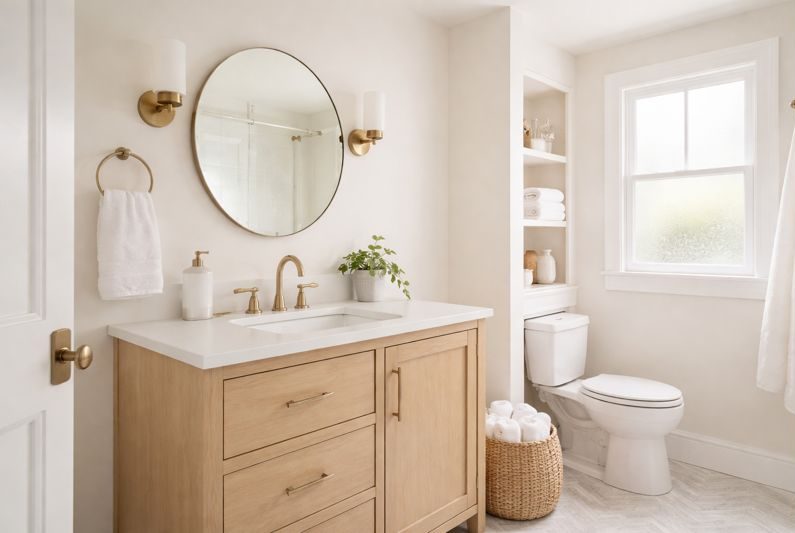
The best small bathroom paint ideas use light, soft colors that reflect light and make the space feel open. These shades help walls recede visually, reduce harsh contrast, and create a brighter, more comfortable bathroom—without remodeling.
Soft Whites and Warm Off-Whites
White remains a top choice for a reason. It reflects light better than any other color and creates a seamless look between walls, ceilings, and trim.
That said, stark white can feel cold in bathrooms. Instead, look for warm off-whites with subtle beige or cream undertones. These keep the space bright while adding softness.
Best for: Windowless bathrooms, minimalist designs, modern spaces.
Light Grays With Warm Undertones
Light gray adds sophistication without shrinking the room—if you choose the right undertone. Warm grays prevent the space from feeling sterile and pair well with white fixtures.
Avoid cool, blue-based grays unless your bathroom gets strong natural light.
Best for: Contemporary bathrooms, marble or stone finishes.
Pale Blues and Soft Greens
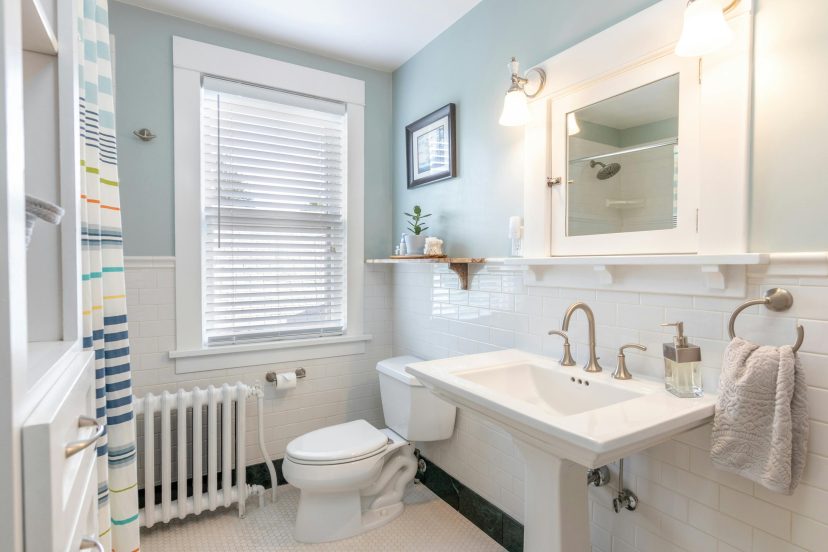
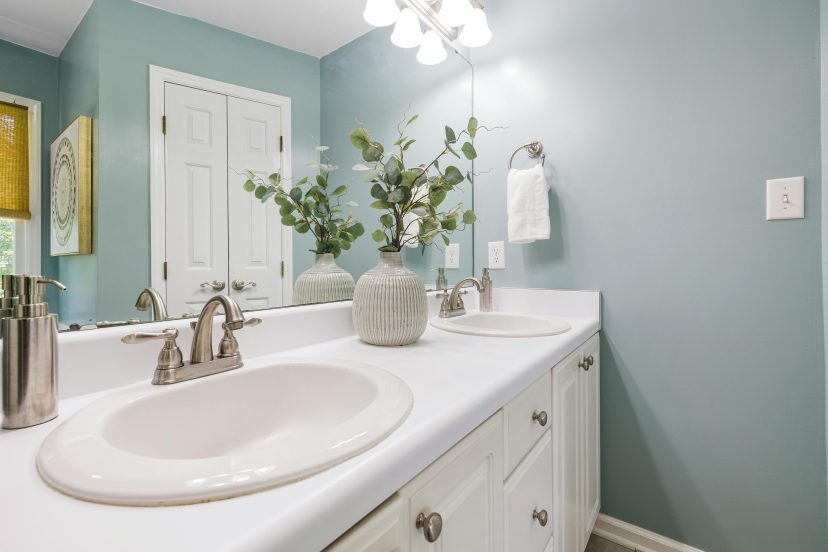
Soft blue and green hues mimic nature and promote calm. When kept light and muted, they visually recede, which makes walls feel farther away.
These colors work especially well in bathrooms where relaxation is a priority.
Best for: Spa-inspired bathrooms, coastal or organic styles.
Greige and Neutral Blends
Greige—part gray, part beige—balances warmth and brightness. It avoids the starkness of white while still reflecting enough light to keep the room open.
Best for: Transitional styles, neutral lovers, resale-friendly designs.
Smart Painting Techniques That Visually Expand Space
Color choice matters—but how you apply it matters just as much.
Painting walls and ceiling the same light color removes visual breaks, making the space feel taller. If you want contrast, keep it subtle and grounded below eye level.
Vertical color placement draws the eye upward, while horizontal bands can make a narrow bathroom feel wider. Always think about guiding the eye, not stopping it.
Gloss, Satin, or Matte? Choosing the Right Finish
In bathrooms, finish affects both appearance and performance.
Satin and semi-gloss finishes reflect more light than matte, which helps small bathrooms feel brighter. They also resist moisture and clean easily.
Use matte sparingly—perhaps on ceilings—if ventilation is excellent.
Mistakes That Make Small Bathrooms Feel Smaller
Even great colors can fail if used incorrectly.
Dark ceilings compress vertical space. High-contrast trim creates visual breaks. Overusing bold accent colors adds clutter instead of depth.
Consistency, softness, and restraint matter more than drama here.
Recommended Paint Products Worth Considering
If you’re looking for reliable, bathroom-friendly options, these paints consistently perform well in small spaces:
- Zinsser Perma-White Interior Paint (Eggshell) – Designed specifically for high-humidity areas, this paint resists mold and mildew while offering a soft, light-reflective finish that helps small bathrooms feel brighter and cleaner.
- DWIL Tile Paint Tub & Tile Refinishing Kit – A great solution if you want to refresh outdated tile without replacement. Its smooth, durable coating helps lighten dark surfaces, which can visually open up a cramped bathroom.
- Rust-Oleum Painter’s Touch Ultra Cover (Quart) – Ideal for trim, cabinets, or small wall sections, this paint delivers even coverage and a smooth finish, making it useful for detail work that ties the room together visually.
- Diamond Brite Kitchen & Bathroom Paint – Formulated for humid environments, this paint offers solid coverage and moisture resistance, making it a dependable choice for bathroom walls that need durability without sacrificing brightness.
- Rust-Oleum Advanced Dry Door & Trim Paint – Perfect for doors, vanities, and trim, this fast-drying formula creates a smooth, professional-looking finish that adds polish without introducing harsh contrast.
What Science Says About Color and Space Perception
There’s real science behind why certain small bathroom paint ideas work better than others—and it all comes down to how our eyes and brains process space.
Interior design research shows that high Light Reflectance Value (LRV) colors bounce more light around a room, which makes walls feel farther apart and ceilings feel higher. In simple terms, lighter colors visually push boundaries outward, while darker shades pull them in. This effect is well documented in architectural studies on how colors change the perception of interior spaces.
Environmental psychology backs this up from a comfort standpoint. Studies on the influence of space and color on human behavior show that lighter, low-contrast environments feel calmer and less mentally “crowded.” In tight rooms—like small bathrooms—this reduces stress and makes the space feel easier to be in, even if the actual square footage stays the same.
That’s why soft whites, pale grays, and muted neutrals continue to outperform bold or dark colors in small bathrooms. They don’t just look brighter—they feel more open, which is exactly what you want in a space you use every day.
How Lighting Changes Paint Color in Bathrooms
Bathroom lighting can dramatically alter paint appearance.
Warm LED bulbs enhance beige and cream tones, while cool LEDs intensify blues and grays. Before making a final choice, check how your paint samples look in your bathroom’s real lighting throughout the day.
Good lighting paired with reflective paint can double the perceived brightness of the room.
When to Use an Accent Wall in a Small Bathroom
Accent walls can work—but only when done intentionally.
Choose the wall farthest from the door to add depth. Keep the color slightly darker than the surrounding walls, not dramatically different.
Avoid accent walls in already tight layouts with many fixtures.
How Paint Works With Tiles, Vanities, and Fixtures
Paint should support existing materials, not fight them.
Match undertones between paint and tile. Balance warm woods with warm neutrals. Keep contrast minimal to maintain visual flow.
When everything feels connected, the space feels larger.
Final Thoughts
The best small bathroom paint ideas focus on light, flow, and simplicity. You don’t need bold colors or expensive finishes—just thoughtful choices. Paint is one of the few upgrades that offers immediate impact with minimal cost. When done right, it can make your bathroom feel calmer, brighter, and far more spacious. If you’re already refreshing other areas of your home, you might also enjoy these outdoor inspiration ideas.
FAQs
1. Which paint colors help a small bathroom feel more spacious?
Soft, light-toned neutrals (warm off-whites, gentle grays, and muted blues) reflect more light and help the room feel open rather than enclosed.
2. Should small bathrooms be painted white?
White works well, but warm whites often feel more inviting than pure white.
3. Is glossy paint better for small bathrooms?
Yes. Satin or semi-gloss finishes reflect light and handle moisture better.
4. Can dark colors work in small bathrooms?
They can, but only with excellent lighting and limited use, such as a single accent wall.
5. How many colors should I use in a small bathroom?
One main color with subtle variations works best to avoid visual clutter.