15 TV Wall Ideas to Upgrade Your Living Room
We may earn a commission for purchases made using our links. Please see our disclosure to learn more.
The TV is often one of the first things you see in a living room, so the wall behind it needs some love. Poor placement, visible wires, and mismatched furniture can make a room feel unfinished at best. These TV wall ideas are ways to update the space in a functional way, whether through paint, floating consoles or wood panels, or custom built-ins. Each choice strikes the right balance between style and comfortable viewing, practical storage and a configuration that makes sense for daily living.
Plan Your TV Wall Before You Start
Begin with the entire seating area, not just the blank wall where the tv will be mounted. The tv should look balanced in the room, but it should also be comfortably viewed from the sofa, chairs, or wherever you watch most.
A good mounting height lets you look straight at the screen from your usual seat without tilting your neck. With a reclining sofa or higher furniture, you might want to go up a bit on the height. Before you make any holes, tape off the outline of the TV on the wall and sit in different places to get a feel for it.
There are a lot of practical things, too, that it’s good to start thinking about early. Where is the game console going? What about the streaming box, speakers, outlets and cables? Sorting this out prior to installation can save you a lot of headaches (and messy wires) down the road.
The best TV wall ideas are not just about making the wall look stylish. They should make the room easier to use, more comfortable to watch, and better suited to the way you actually live.
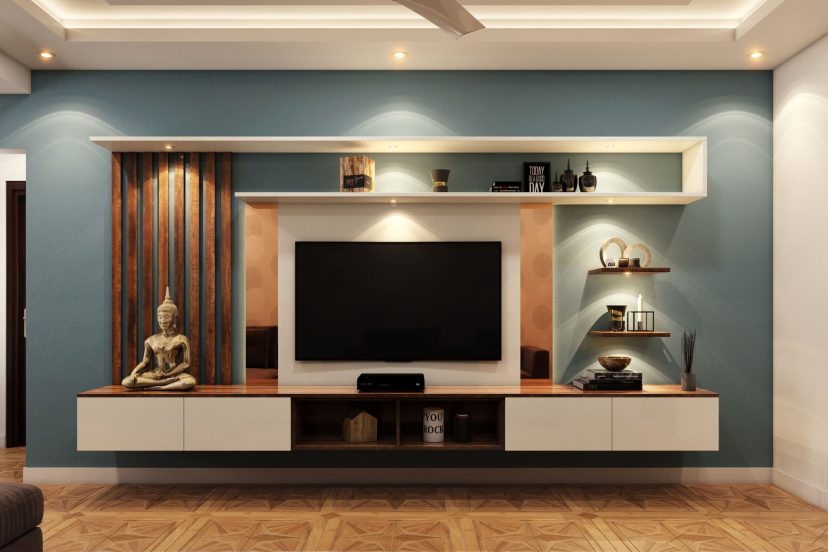
1. Add Warmth With Slatted Wood Panels
Vertical wood slats soften the technological appearance of a television while adding texture and warmth. They work especially well in modern, Scandinavian, and mid-century-inspired rooms.
Use natural oak for an airy finish or walnut for a richer, moodier look. You can cover the full wall or install one wide panel behind the screen. Black felt-backed acoustic slats may also help reduce echoes in a large, hard-surfaced room.
2. Install a Floating Media Console
Among the most practical TV wall ideas, a floating console adds storage while keeping the floor area open. A wall-mounted console keeps the floor visible, helping a small living room feel less crowded. It also provides concealed storage for remotes, games, and other accessories.
Choose a console that is wider than the television so the arrangement looks balanced. Leave enough space between the two for ventilation and easy access to components. If the unit holds heavy equipment, fasten it to wall studs or suitable masonry anchors.
3. Surround the TV With Built-In Storage
Floor-to-ceiling built-ins can turn a plain wall into a complete entertainment center. Combine closed lower cabinets with open upper shelves to balance storage and display space.
Painting the cabinetry and wall the same color creates a polished, architectural effect. For a less formal appearance, use natural wood shelves with painted cabinets. Keep the objects around the screen relatively simple so they do not distract you while watching.
Curved shelves or softly rounded furniture can make a large installation feel more inviting. See these curved furniture ideas for softer living spaces for inspiration.
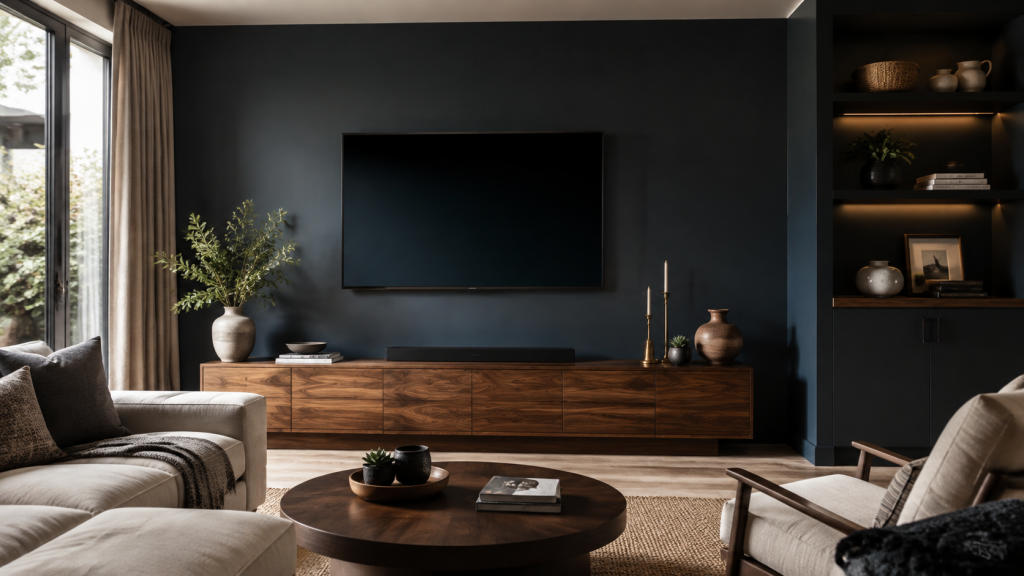
4. Use a Deep Paint Color
Paint offers one of the easiest and least expensive TV wall ideas. Charcoal, navy, forest green, and deep brown reduce the contrast between the screen and its surroundings.
A dark wall does not automatically make a room feel smaller. With warm lamps, a light rug, and pale upholstery, it can give the living room depth. Always test your chosen color throughout the day because natural and artificial light may change its appearance.
5. Create a Balanced Gallery Wall
A carefully planned gallery wall helps the television blend into the décor. Arrange framed art, photographs, and small decorative objects around it rather than placing everything in one rigid row.
Use paper templates to test your arrangement first. Repeating one frame color or maintaining consistent spacing will keep the display cohesive. Avoid crowding the television; some open wall space gives both the artwork and screen room to breathe.
6. Try a Stone or Brick Backdrop
Stone veneer, limewashed brick, or realistic porcelain panels bring natural texture to an entertainment wall. This approach suits rustic, industrial, transitional, and contemporary interiors.
Select a relatively quiet material with subtle color variation. A very busy surface can compete with fast-moving images on the screen. Because masonry products add weight, check the wall structure and use an installation method approved by the material manufacturer.
7. Keep the Design Minimal
Sometimes the strongest design is also the simplest. Mount the television on a plain wall, conceal the cables, and place a low console beneath it.
Limit accessories to two or three pieces, such as a lamp, vase, and small stack of books. This restrained arrangement lets good proportions and quality finishes do the work. It is also easier to update than an elaborate custom installation.
8. Choose a Frame-Style Television
A frame-style television displays artwork or photography when you are not watching a program. It works particularly well in formal living rooms where a conventional screen might feel intrusive.
Choose digital artwork that complements the room’s palette and change it seasonally. A slim, picture-frame-like bezel strengthens the illusion. Remember that art mode still consumes electricity, so use motion detection or a scheduled shutoff when available.
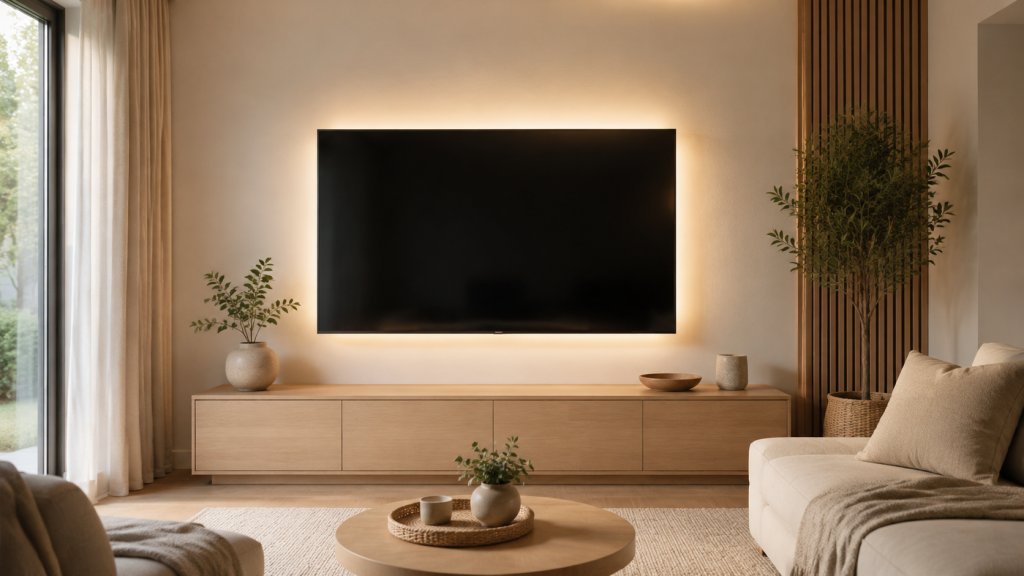
9. Add Gentle LED Backlighting
A soft glow behind the television creates atmosphere and reduces the harsh contrast between a bright screen and a dark room. Use dimmable LEDs with an adjustable white setting for greater control.
Place the strip behind the screen rather than where individual diodes remain visible. Warm white usually feels most comfortable in a cozy living room, while color-changing lights suit movie nights or gaming.
Lighting has a major effect on the character of an entertainment area. These statement lighting ideas offer more ways to layer functional and decorative light.
10. Introduce Fluted Wall Panels
Fluted MDF, timber, or composite panels give the wall a refined rhythm without relying on bold patterns. They can cover the whole surface or define a narrower zone behind the television.
Painted fluting looks elegant in traditional and transitional rooms. Wood-effect panels offer a warmer contemporary finish. Check that any panel thickness still allows your mounting hardware to connect securely to the underlying structure.
11. Make Use of a Corner
A corner TV arrangement can solve layout problems in rooms with several doors or large windows. It may also improve viewing from an L-shaped sectional.
Use a full-motion mount that lets you pull out and angle the screen. A corner console or compact floating shelf can hold components without wasting floor space. Confirm the mount’s weight rating, VESA compatibility, and required stud position before buying.
12. Combine the TV and Fireplace Carefully
Placing a television above a fireplace creates one clear focal point, but it is not right for every room. The screen may end up too high, and heat can shorten the life of electronic equipment.
Check both manufacturers’ clearance requirements and measure the surface temperature where the TV will sit. A mantel may help redirect heat, but it does not replace proper clearances. If the resulting viewing angle feels uncomfortable, place the television beside the fireplace instead.
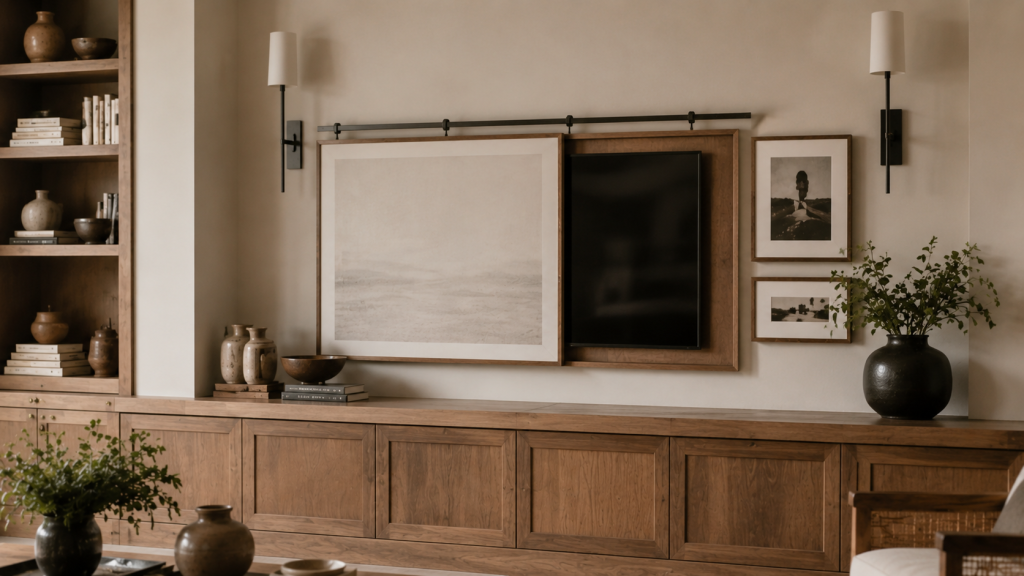
13. Conceal the Screen When It Is Off
Sliding panels, cabinet doors, artwork lifts, and motorized covers can hide a television completely. This solution works well in traditional rooms or multipurpose spaces where you do not want technology to dominate.
Make sure the enclosure allows ventilation and does not interfere with speakers or remote signals. Manual sliding panels are usually simpler and more affordable than motorized mechanisms.
14. Frame the TV With Open Shelving
Open shelves create a custom appearance without the cost of full built-ins. Position matching shelves on both sides of the screen or run one long shelf above it.
Mix books with ceramics, plants, and personal objects, leaving some areas empty. Avoid placing trailing plants or unstable decorations directly over the television. Asymmetrical styling can look relaxed, but the overall visual weight should remain balanced.
15. Build a Two-Tone Feature Wall
Divide the entertainment wall with two complementary finishes. For example, pair cream paint with walnut panels, warm white with sage green, or matte black with light oak.
The darker or more textured section can visually frame the screen, while the lighter area keeps the room open. Align the transition with the console, shelving, or another architectural feature so it looks purposeful.
Recommended Products for a TV Wall
Once you have compared these TV wall ideas, choose the option that fits your budget, wall construction, and storage needs. These five widely available Amazon products can help complete different types of installations. Always confirm dimensions, television weight, VESA pattern, wall construction, and current model specifications before ordering.
- ECHOGEAR Full-Motion TV Wall Mount: A flexible option for rooms that need swiveling or tilting rather than a fixed viewing position.
- Mounting Dream Tilting TV Wall Mount: A slim, straightforward choice when you only need a modest downward tilt.
- Legrand Wiremold Cord Cover Kit: A paintable surface-mounted channel that organizes visible cables without opening the wall.
- Philips Hue Play Gradient Lightstrip: App-controlled accent lighting designed to create a customizable glow behind compatible televisions.
- SANUS Universal Soundbar Mount: An adjustable bracket that helps keep a compatible soundbar visually aligned with the screen.
Make Safety Part of the Design
When choosing between different TV wall ideas, focus on comfort first, then add design details that make the wall feel finished. Never select a mount by screen size alone. Confirm its weight limit and VESA pattern, then verify that the wall can support it. Drywall itself cannot safely hold a television unless the mounting system specifically uses properly rated anchors and permits that installation.
The U.S. Consumer Product Safety Commission’s tip-over guidance recommends securing televisions and furniture to help prevent serious injuries. This matters even more if young children live in the home.
For comfortable placement, measure rather than guess. The detailed TV mounting-height guidance from The Spruce recommends keeping the screen’s center near seated eye level, although seating height and room use can affect the final position.
Hire a qualified installer or electrician if you cannot identify studs, need to route power inside a wall, or plan to mount the TV on masonry. Never run an ordinary television power cord inside a wall unless local electrical rules and the cord’s rating explicitly permit it.
Conclusion
A great TV wall is balanced, hides wires and makes watching comfortable. Concentrate on the correct screen height, right scale, smart storage and a finish best suited to the room. You don’t need a major remodel. Paint, shelves, paneling, a floating console, and better cable management — anything can make a wall feel purposeful. Make these TV wall ideas work for you to design an arrangement that fits your space, accommodates everyday use and elevates the look of your living room.
FAQs
What looks good on the wall behind a TV?
Paint, wood slats, fluted panels, wallpaper, stone veneer, and built-in cabinetry all work well. Choose a finish with moderate texture or contrast so it frames the television without competing with the picture.
Is a light or dark color better for a tv wall?
A darker color helps the screen blend into the wall and can create a theater-like mood. A lighter wall keeps a small room bright. The best choice depends on your natural light, furniture, and preferred atmosphere.
What is the ideal width for a media console?
A console generally looks most balanced when it extends beyond both sides of the television. Aim for a unit roughly 6 to 12 inches wider on each side when the available space allows.
How do I conceal tv cables without opening the wall?
Use a paintable surface cord cover. Run it vertically from the television to the console, secure it correctly, and paint it the same color as the wall. Cable sleeves can organize cords behind furniture.
Can I decorate around a large TV?
Yes. Use built-ins, open shelving, slim sconces, or restrained artwork to balance its size. Repeat colors and materials already found in the room, and leave open space around the screen to avoid a cluttered result.