Mediterranean Living Room Inspo: 10 Ways to Bring Coastal Warmth Indoors
We may earn a commission for purchases made using our links. Please see our disclosure to learn more.
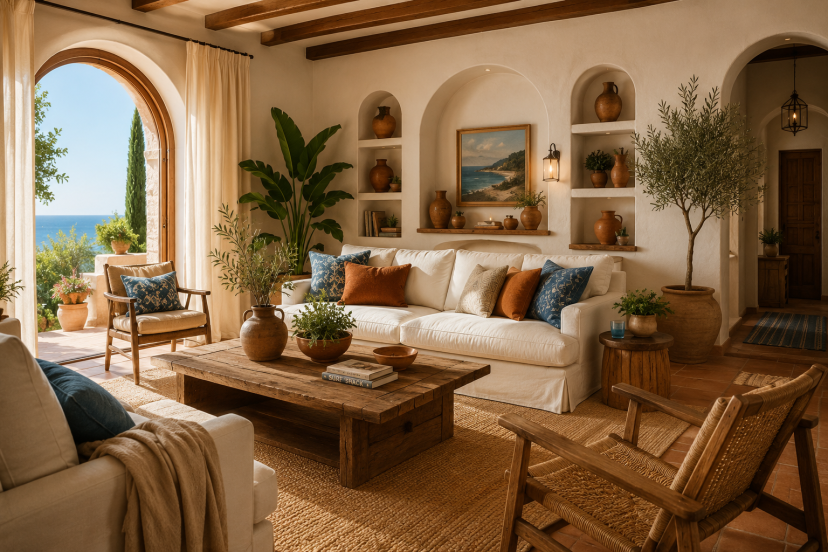
A Mediterranean living room mixes warm tones and natural materials with relaxed coastal elements to result in a bright, cozy, and welcoming environment. You don’t need a major remodel to get the look. Minor changes like textured materials, natural colors, rustic wood, pottery and plants can go a long way. These 10 tips will help you capture the warmth of the Mediterranean for your home—both practically and stylishly.
What Defines a Mediterranean Living Room?
A Mediterranean living room takes inspiration from homes in coastal regions of Spain, Italy, Greece, and nearby countries. While each region has its own character, the style usually combines warm, earthy colors with natural materials such as wood, stone, linen, rattan, and clay.
These rooms often feature comfy furniture, handmade ceramics, soft textured fabrics, and lots of natural light pouring in. The overall vibe is super relaxed, welcoming and just a bit rustic rather than all polished up.
You can also tweak the style to suit a modern home, one with a coastal feel, a classic traditional look, or fit perfectly with a minimalist aesthetic – which makes it pretty easy to incorporate your existing furniture & decor.
1. Begin With Warm, Sun-Washed Walls
Begin with a soft backdrop in warm whites, ivory, cream, pale sand, or light beige. These colours reflect the daylight beautifully and help show up the texture on furniture and the ceramics.
Skip going for a stark blue-white. Opt for a paint with a hint of yellow, beige or clay in it instead – that’s where the magic happens. Or try a limewash-style finish with a bit of texture to give it that old plaster feel.
Alternatively, get a similar look by painting the walls and trim in different shades of the same warm neutral. Slightly darker on the trim adds some depth without throwing the whole room’s vibe off.
2. Build an Earthy Mediterranean Color Palette
Think of colors you might notice on a coastal walk: terracotta rooftops, olive leaves, sun-baked stone, sandy paths, and deep blue water.
Choose two or three neutrals, then add one stronger accent. Pair cream walls and a camel sofa with rust pillows and touches of cobalt blue. Olive, ochre, faded turquoise, brick red, and charcoal also work.
Use bold colors in smaller doses. A room filled with bright blue can quickly drift from “Mediterranean escape” to “souvenir shop near the airport.”
3. Layer Natural Textures
Texture gives a Mediterranean living room its warmth. Mix materials that look and feel different, such as linen, cotton, jute, rattan, wool, raw wood, ceramic, and stone.
A woven rug can ground the seating area, while linen curtains soften the windows. Add a chunky throw, cane chair, or rough ceramic bowl for more depth.
Research into biophilic design frequently examines natural materials, daylight, plants, and organic shapes as ways to connect indoor environments with nature. A critical review of biophilic design in architecture identifies these elements as important parts of restorative and people-centered spaces.
4. Choose Furniture With Simple, Solid Shapes
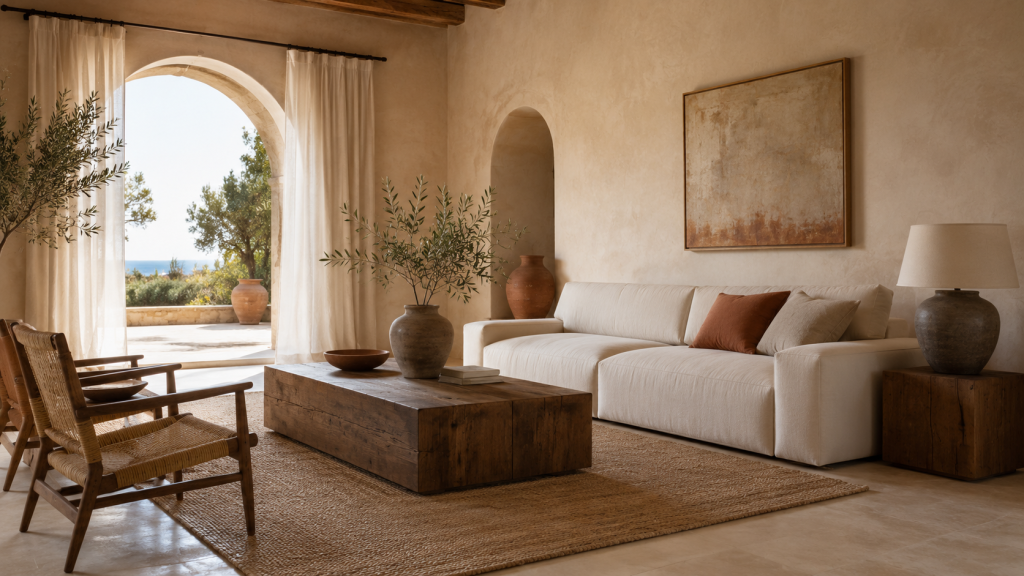
Mediterranean furniture usually feels sturdy rather than delicate. Look for low-profile sofas, substantial coffee tables, rounded side tables, and wooden pieces with visible grain.
Skip the matching set. A mixed collection often feels more authentic. Pair a clean-lined sofa with an older chest, turned-leg table, or carved bench.
Do not worry if every wood finish is not identical. A little variation helps the room look gathered over time. However, repeating one finish in two or three places will keep the mix from feeling accidental.
A handmade furniture detail can add character elsewhere in your home, too. These practical DIY headboard ideas show how wood, fabric, and textured finishes can create a similarly relaxed look in the bedroom.
5. Let in as Much Daylight as Possible
Mediterranean rooms are closely connected to sunlight. Keep window treatments light and simple so they do not block the room’s best natural feature.
Try sheer linen-look curtains, woven shades, or panels hung beyond the window frame. Place a mirror where it can bounce daylight into a dark corner.
This choice offers more than visual appeal. In a crossover study involving healthy adults, greater access to daylight at home was associated with improved circadian alignment, sleep, and mental-health measures. The researchers behind the daylight-at-home study emphasized the value of designing homes that support daytime light exposure.
Keep television screens and large furniture from covering windows whenever possible. Even moving a tall cabinet a few feet can make the entire room feel more open.
6. Add Terracotta, Stone, and Handmade Pottery
Pottery is one of the simplest ways to bring age and warmth into the room. Choose pieces with uneven glaze, visible texture, or slightly irregular shapes.
Use a terracotta vase on the coffee table, a clay pot beside the sofa, or a stone bowl on a console. Some pieces can stay empty; not every vase needs a floral assignment.
For a more collected look, mix matte and glazed finishes. Cream, rust, black, olive, and blue-and-white ceramics can sit comfortably together when the rest of the palette remains restrained.
Try shopping at local markets, antique stores, or thrift shops before buying an entire matching collection. A slightly chipped bowl or weathered jug may give the room more character than something perfectly polished.
7. Bring in Olive Branches and Greenery
An olive tree instantly suggests the Mediterranean, but it is not your only option. Rosemary, citrus, lavender, eucalyptus, and trailing vines can create a similar connection.
Choose one larger plant instead of many tiny pots. A tall plant gives an empty corner purpose and adds height.
If natural light is limited, use a convincing faux olive tree and place it inside a larger woven basket or aged ceramic planter. The upgraded container often makes a bigger difference than the plant itself.
Fresh olive or eucalyptus branches can also work as short-term decorations. Place a few stems in a rustic vase rather than crowding the arrangement with flowers.
8. Use Pattern Without Overloading the Room
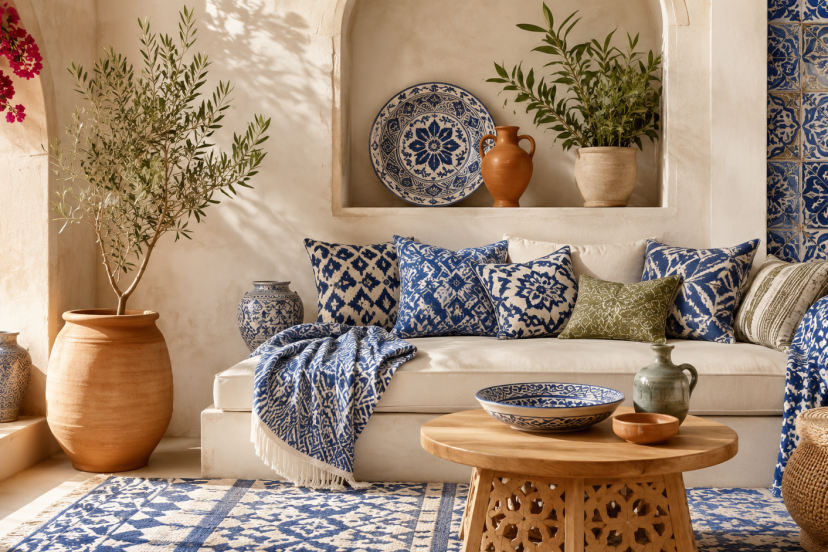
Mediterranean patterns often appear in tile, rugs, cushions, and carved details. Geometric motifs, stripes, botanical prints, and traditional blue-and-white designs all fit the style.
The trick is to choose one main pattern and let the others whisper. You might use a patterned rug with mostly solid pillows, or keep the rug neutral and add two tile-inspired cushion covers.
Repeating one color across different patterns helps the room feel connected rather than chaotic. For example, a muted blue can appear in a cushion, ceramic bowl, and piece of wall art without looking overly coordinated.
Remember that pattern does not have to come from fabric. A carved cabinet door, tiled tray, or decorative screen can introduce visual movement in a quieter way.
9. Warm the Room With Layered Lighting
Even a bright room needs softer lighting after sunset. Combine a ceiling fixture with lamps or sconces instead of relying on one harsh overhead light.
Choose warm-toned bulbs and shades made from linen, woven fiber, glass, or aged metal. A ceramic lamp base can double as a decorative object during the day.
Candles and lanterns add atmosphere, too. Just keep real flames away from curtains, dried branches, children, and pets. Flameless candles are a sensible shortcut when you want the glow without the tiny household fire drill.
Arrange lighting at varying levels to create a softer, more balanced glow. A table lamp beside the sofa and a taller floor lamp near a reading chair will create a softer, more balanced evening glow.
10. Finish With Collected, Personal Details
The most inviting Mediterranean living rooms do not look decorated in one afternoon. They feel as though objects arrived slowly through family, travel, flea markets, and everyday life.
Display meaningful books, framed sketches, handmade bowls, brass pieces, or landscape art. Leave breathing room so each object can be noticed.
A shallow tray can keep smaller items organized on the coffee table. Three well-chosen pieces usually look more intentional than twelve objects competing for attention.
Avoid filling every shelf. A little empty space allows textured walls, wooden furniture, and handmade accessories to become part of the decoration.
Easy Decor Finds for a Mediterranean Living Room
You do not need to replace every piece of furniture to create a Mediterranean feel. A few well-chosen accessories can add warmth, texture, and coastal character while still working with the room you already have.
SAFAVIEH Natural Fiber Jute Area Rug
A handwoven jute rug creates a warm, textured foundation beneath a sofa and coffee table. Its natural finish pairs easily with cream upholstery, rustic wood, linen curtains, and terracotta accents.
LUKA Rustic Terracotta Ceramic Vase
This handled terracotta vase adds an aged, handmade quality to a shelf, console, or coffee table. Style it with olive branches, dried stems, or fresh flowers, or leave it empty as a simple decorative piece.
MIULEE Natural Beige Linen-Blend Pillow Covers
Neutral linen-blend pillow covers soften the seating area without making it feel busy. Pair them with one or two cushions in rust, olive green, faded blue, or a subtle geometric pattern.
Realead 6-Foot Artificial Olive Tree
A tall faux olive tree brings height and greenery to an unused corner without requiring regular care. Place it inside a woven basket, clay pot, or textured planter to make the base look more natural and finished.
JONATHAN Y Cobalt Blue Glass Table Lamp
The cobalt blue glass base introduces a classic coastal accent, while the rope detail and linen-style shade keep the look relaxed. Use it on a side table or console to add color and softer evening light.
Conclusion
The best Mediterranean spaces have an easy, laidback vibe because every decision reinforces the same mood: warmth and comfort with a strong connection to natural surroundings. Instead of attempting to recreate a particular coastal house, take the style as inspiration and tailor it for your own room, budget and daily routine. When you’ve acquired that warm, harmonious, personal feeling in your room, you’ve captured the essence of Mediterranean design.
FAQs
What colors work best in a Mediterranean living room?
Warm white, cream, sand, terracotta, olive green, ochre, faded blue, and natural wood tones work well. Start with quiet neutrals and introduce richer colors through cushions, rugs, pottery, and artwork.
Can a Mediterranean living room look modern?
Yes. Choose furniture with cleaner lines, use fewer accessories, and limit the color palette. Keep the natural materials, textured surfaces, and warm lighting while reducing ornate details.
Which flooring options work well in a Mediterranean living room?
Terracotta tile, natural stone, warm-toned wood, and matte-finish flooring all suit Mediterranean interiors. If replacing the floor is not practical, use a jute or faded patterned rug to add warmth.
How can I create the look on a small budget?
Paint the walls, change the pillow covers, bring in thrifted pottery, and add a woven basket or secondhand wooden table. Small changes in color and texture often have more impact than expensive themed decorations.
Do I need blue accents?
No. Blue is common, but it is not essential. Terracotta, olive, cream, dark wood, and warm brass can create a convincing Mediterranean palette without using blue at all.