Top 10 Ryobi Cordless Power Tools
We may earn a commission for purchases made using our links. Please see our disclosure to learn more.
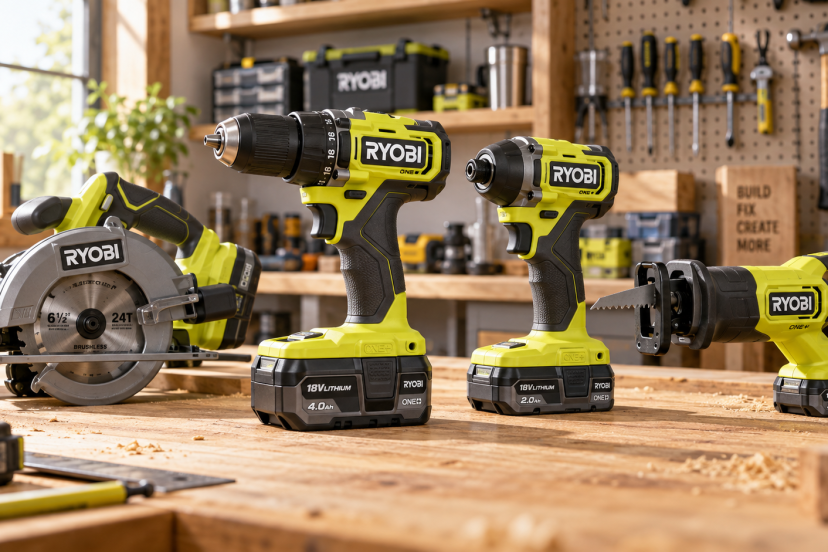
The best Ryobi cordless power tools offer a practical balance of performance, affordability, and battery compatibility. They’re especially appealing to homeowners who want to build a useful tool collection without buying a different battery and charger for every job. This guide covers ten standout ONE+ 18V tools for drilling, cutting, sanding, repairs, woodworking, and automotive work. Some are sold as complete kits, while others are bare tools intended for people who already own Ryobi batteries.
Our Top Picks
| Product | Best For | Key Feature | Rating |
| Ryobi PCL206K2 Drill/Driver Kit | First-time buyers | Includes two batteries | ★★★★⯪ |
| Ryobi PBLID01B HP Impact Driver | Driving screws | Brushless motor | ★★★★⯪ |
| Ryobi PBLCS300B Circular Saw | Lumber and sheet goods | Full-size 7-1/4-inch blade | ★★★★⯪ |
| Ryobi PCL515B Reciprocating Saw | Demolition | 3,400 strokes per minute | ★★★★⯪ |
| Ryobi PBLMT51B Multi-Tool | Remodeling | Tool-free accessory changes | ★★★★⯪ |
| Ryobi PCL525B Jig Saw | Curved cuts | Four orbital settings | ★★★★⯪ |
| Ryobi PCL406B Random Orbit Sander | Furniture refinishing | Hook-and-loop sanding pad | ★★★★⯪ |
| Ryobi P601 Trim Router | Woodworking | Micro-depth adjustment | ★★★★⯪ |
| Ryobi P262 Impact Wrench | Automotive work | High breakaway torque | ★★★★⯪ |
| Ryobi P737D High-Pressure Inflator | Tires and sports gear | Digital pressure gauge | ★★★★⯪ |
Top 10 Ryobi Cordless Power Tools
1. Ryobi ONE+ PCL206K2 1/2-Inch Drill/Driver Kit

The PCL206K2 is the most sensible starting point for a new Ryobi collection. It handles furniture assembly, pilot holes, cabinet hardware, shelves, and most routine household repairs without feeling excessively heavy.
More importantly, this kit includes two compact batteries and a charger. That makes it better value for a beginner than buying a bare tool and sourcing the essentials separately.
Key features: 1/2-inch keyless chuck, two-speed gearbox, 24-position clutch, LED work light, two batteries, charger
Best for: New homeowners and general DIY work
Pros: Complete starter kit; simple controls; useful clutch range
Cons: Brushed motor; compact batteries offer limited runtime on demanding jobs
Why I recommend it: It gives beginners everything needed to start working while opening the door to the wider ONE+ platform.
2. Ryobi ONE+ HP PBLID01B Brushless Impact Driver

Long screws and stubborn fasteners can overwhelm a basic drill. The PBLID01B uses an impact mechanism and brushless motor to deliver stronger, more efficient driving power.
Its variable speed modes help prevent smaller screws from being stripped while still providing enough force for structural screws and outdoor construction. Be aware that this is commonly sold as a bare tool.
Key features: Brushless motor, 1/4-inch hex collet, multiple speed settings, LED light
Best for: Decking, framing, fencing, and repetitive screw driving
Pros: Strong torque; compact body; one-handed bit release
Cons: Loud under load; battery usually sold separately
Why I recommend it: It complements a drill perfectly and makes larger fastening jobs noticeably quicker.
3. Ryobi ONE+ HP PBLCS300B 7-1/4-Inch Circular Saw

The PBLCS300B is a full-size cordless circular saw built for cutting framing lumber, plywood, and other sheet materials. Its 7-1/4-inch blade gives it more useful cutting depth than Ryobi’s smaller entry-level saws.
The brushless motor is a worthwhile upgrade for regular construction projects. A larger high-performance battery is recommended because circular saws draw considerably more power than drills.
Key features: 7-1/4-inch blade, brushless motor, bevel adjustment, LED light, dust port
Best for: Renovations and woodworking projects
Pros: Full-size cutting capacity; cordless convenience; solid power
Cons: Heavier than compact saws; performs best with a larger battery
Why I recommend it: It offers the capacity needed for serious DIY projects without moving to another battery system.
4. Ryobi ONE+ PCL515B Reciprocating Saw

A reciprocating saw is designed for rough cuts rather than furniture-grade precision. The PCL515B is useful for demolition, pruning, cutting damaged pipes, and breaking down old wood for disposal.
Its variable-speed trigger provides better control when starting a cut. Vibration is noticeable during long sessions, but that is common with saws in this category.
Key features: Up to 3,400 SPM, one-inch stroke, variable-speed trigger, tool-free blade clamp
Best for: Demolition, pruning, and emergency repairs
Pros: Fast cutting; easy blade changes; versatile blade selection
Cons: Significant vibration; not intended for clean finish cuts
Why I recommend it: Few tools are as useful when material must be removed quickly and appearance is secondary.
5. Ryobi ONE+ HP PBLMT51B Oscillating Multi-Tool

The PBLMT51B tackles jobs that are awkward for conventional saws. It can undercut door trim, plunge-cut drywall, remove grout, scrape adhesive, and sand inside tight corners.
A variable-speed trigger makes it easier to begin delicate cuts without immediately running at maximum speed. The quick-change accessory system also saves time when switching tasks.
Key features: Brushless motor, variable-speed trigger, LED light, tool-free accessory system
Best for: Remodeling and detailed repair work
Pros: Reaches confined spaces; accepts multiple accessory types; controlled cutting
Cons: Accessories wear quickly; vibration can become tiring
Why I recommend it: It solves the small, frustrating jobs that often slow down remodeling projects.
6. Ryobi ONE+ PCL525B Orbital Jig Saw

A circular saw handles straight cuts well, but the PCL525B is better when a project calls for curves, cutouts, or controlled cuts through thinner material. It is a useful choice for shelving, decorative panels, and countertop openings.
The four orbital settings let you choose between smoother cutting and faster material removal. Results still depend heavily on using the correct blade.
Key features: Four orbital settings, variable speed, tool-free blade clamp, LED light
Best for: Curves and interior cutouts
Pros: Good maneuverability; easy blade changes; adjustable cutting action
Cons: Less accurate on long straight cuts; blade deflection is possible
Why I recommend it: It adds cutting flexibility that a circular or reciprocating saw cannot provide.
7. Ryobi ONE+ PCL406B 5-Inch Random Orbit Sander

The PCL406B makes furniture refinishing and surface preparation easier when working away from an outlet. Its random orbital motion helps reduce visible swirl patterns when you move through the proper grit sequence.
Dust collection is helpful but not perfect, so respiratory protection and good ventilation are still important. Battery weight also makes it slightly less balanced than a corded palm sander.
Key features: Five-inch sanding pad, hook-and-loop attachment, dust collection bag
Best for: Furniture, cabinets, and painted surfaces
Pros: No power cord across the workpiece; common disc size; comfortable grip
Cons: Produces airborne dust; runtime varies considerably by battery
Why I recommend it: It is convenient for medium-size refinishing projects and quick surface preparation.
8. Ryobi ONE+ P601 Cordless Trim Router

The P601 brings cordless convenience to edge profiles, hinge mortises, laminate trimming, and other light routing work. Its micro-adjustment dial provides the control needed to fine-tune cutting depth.
It accepts 1/4-inch-shank bits and works best when making several shallow passes. It is not a replacement for a large plunge router when removing substantial amounts of hardwood.
Key features: 1/4-inch collet, micro-depth adjustment, aluminum base, LED lighting
Best for: Edge finishing and light woodworking
Pros: Portable; precise depth adjustment; clear base area
Cons: Fixed-speed design; limited to lighter routing tasks
Why I recommend it: It is an approachable, affordable router for DIY furniture and trim projects such as budget-friendly built-in bookshelves.
9. Ryobi ONE+ HP P262 1/2-Inch Impact Wrench

The P262 is intended for jobs that need considerably more torque than an impact driver can supply. It is especially useful for removing lug nuts, working on suspension components, and loosening weathered bolts.
Its auto mode can reduce the chance of overtightening fasteners, but you should still use a torque wrench for final tightening on safety-critical components.
Key features: Brushless motor, 1/2-inch anvil, multiple power modes, auto mode, LED light
Best for: Vehicle maintenance and heavy fasteners
Pros: Strong breakaway torque; selectable modes; useful for roadside work
Cons: Bulky for small hardware; does not replace a torque wrench
Why I recommend it: It gives DIY mechanics genuinely useful power without requiring an air compressor.
10. Ryobi ONE+ P737D High-Pressure Inflator

Although smaller than the other tools here, the P737D can be one of the most frequently used. It inflates car and bicycle tires, sports balls, and other high-pressure items without a power cord.
The digital gauge is convenient for monitoring pressure, though it is wise to confirm critical tire pressures with a separate quality gauge.
Key features: Digital gauge, high-pressure hose, pistol-grip design, onboard needle storage
Best for: Tire top-ups and sports equipment
Pros: Compact; easy to carry; uses standard ONE+ batteries
Cons: Not designed for high-volume inflatables; requires manual trigger operation
Why I recommend it: It turns an existing Ryobi battery into a practical garage and roadside tool.
How to Choose Ryobi Cordless Power Tools
Start with the jobs you genuinely expect to complete. A drill/driver is the best first purchase for most households, followed by an impact driver or circular saw if you plan to build decks, shelves, planters, or furniture.
Check whether each product is a kit or a bare tool. Bare tools cost less but normally exclude the battery and charger. Compact batteries keep drills light, while saws, routers, and impact wrenches generally perform better with higher-capacity packs.
Ryobi’s HP brushless models cost more than standard brushed tools. The upgrade makes the most sense for demanding or frequent work because brushless motors typically offer better efficiency, power, and service life.
Finally, match the accessory to the material. A quality saw blade, drill bit, sanding disc, or router bit often improves the finished result more than buying a more expensive tool and fitting it with a poor accessory.
Final Thoughts
The best Ryobi cordless power tools are the ones that match your projects while making good use of the ONE+ battery platform. The PCL206K2 drill kit is the strongest starting point for a beginner, while the PBLID01B impact driver and PBLCS300B circular saw are smart additions for larger builds. Woodworkers will get more from the jig saw, sander, and router, whereas the P262 impact wrench is the clear choice for home mechanics.
Frequently Asked Questions
Are Ryobi cordless power tools good for beginners?
Yes. Their controls are generally approachable, prices are competitive, and the ONE+ system lets beginners expand their collection without replacing batteries and chargers each time.
Do all Ryobi ONE+ tools use the same battery?
Current 18V ONE+ tools are designed around the same battery interface. However, Ryobi’s 18V, 40V, USB Lithium, and other voltage platforms are separate and should not be mixed.
Are Ryobi HP tools worth the extra cost?
HP brushless tools are worthwhile for frequent or demanding work. Casual users completing occasional light repairs may be perfectly satisfied with less expensive brushed models.
What battery size is best for Ryobi tools?
A compact 1.5Ah or 2Ah battery keeps drills and impact drivers light. Saws, routers, sanders, and impact wrenches usually benefit from a 4Ah or larger pack for stronger sustained performance and longer runtime.
Should I buy a Ryobi kit or a bare tool?
Buy a kit if you do not already own compatible batteries and a charger. Once you have enough batteries, bare tools usually offer the most economical way to expand your collection.