Vintage European Decor: Timeless Pieces That Elevate Any Room
We may earn a commission for purchases made using our links. Please see our disclosure to learn more.
Vintage European decor makes a home warm, stylish and full of personality. A single wrong piece will make the style look dated, while too many ornate details will overpower a room. By incorporating a few classic pieces, plush fabric, and warm finishes, you can put together a look that is timeless, personal, and beautifully-used.
What Is Vintage European Decor?
Vintage European decor takes inspiration from traditional European homes filled with charm, history, and character. Think French country charm, English cottage warmth, Italian villa textures, Belgian linen simplicity, and antique market finds that look like they have lived a full life.
This style often includes natural materials, soft colors, patina, aged metals, curved furniture, classic artwork, vintage mirrors, ceramic vases, and layered textiles. However, it is not about making your home look like a museum. A good vintage European room still feels livable.
It should feel elegant, but never stiff. Beautiful, but not untouchable. Styled, but not staged.
That is the real magic.
Key Elements of Vintage European Decor
The easiest way to understand vintage European decor is to think of it in layers. You do not need every detail in every room. In fact, the look works better when you choose a few strong pieces and let them breathe.
Ornate Mirrors
A vintage-style mirror is one of the fastest ways to add European charm. Look for antique brass, distressed wood, gold finishes, carved frames, or arched shapes.
French-inspired mirrors look beautiful above console tables, mantels, dressers, and bathroom vanities. They also help reflect light, which makes them especially useful in dark hallways or narrow rooms.
Aged Brass and Bronze Accents
Aged brass adds warmth without looking too shiny or flashy. Try brass candle holders, picture frames, wall sconces, cabinet pulls, or small trays.
Unlike bright gold, aged brass feels softer and more relaxed. It pairs beautifully with cream, olive, dusty blue, burgundy, charcoal, and warm wood tones.
European-Inspired Artwork
Vintage European rooms often include landscapes, portraits, botanical prints, sketches, or still-life artwork. Original oil paintings are wonderful, of course, but you do not need them to create the look.
A well-framed reproduction print can still feel elegant and intentional. For a softer effect, choose muted colors instead of bright modern artwork.
Linen and Natural Fabrics
Linen curtains, cotton bedding, wool throws, and faded rugs help soften heavier antique-style pieces. These fabrics make a room feel relaxed instead of overly formal.
A vintage European space should never look like everything came from one matching furniture set. Natural fabrics help create that layered, collected feeling.
Carved Wood and Curved Furniture
Look for soft curves, turned legs, cane details, carved frames, and warm wood finishes. Even one small carved side table can make a modern room feel more classic.
And if you already own clean-lined furniture, do not worry. Vintage European decor works beautifully when mixed with simple modern pieces.
How To Add Vintage European Decor Without Overdoing It
The easiest way to ruin vintage European decor is by adding too much at once. A room can go from charming to theatrical fast.
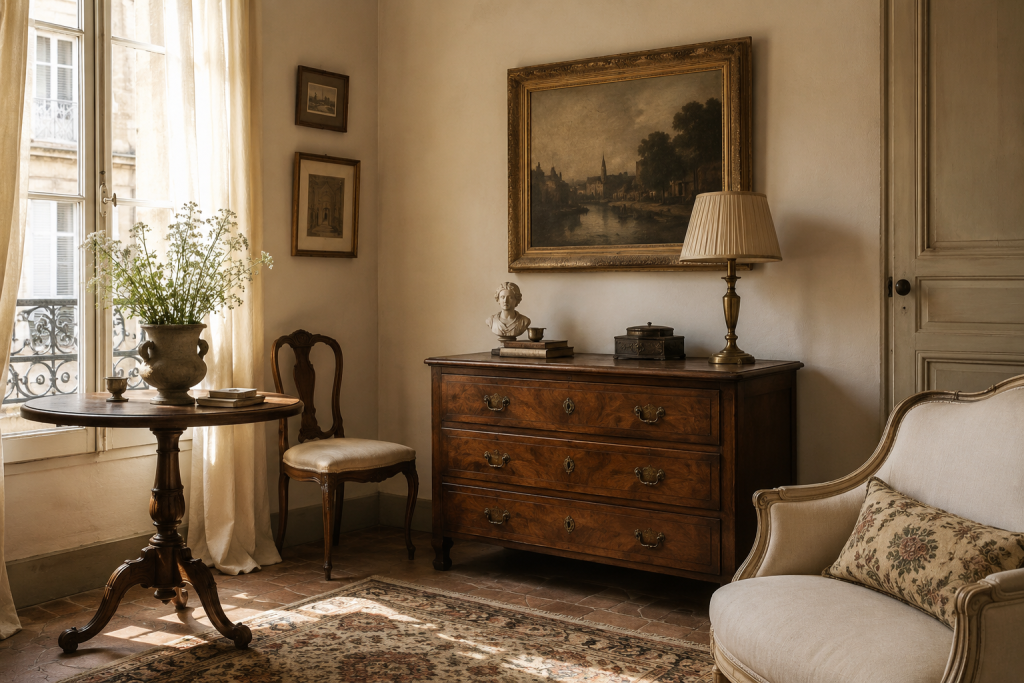
Start with one statement piece. Choose a vintage-style mirror, an antique-looking cabinet, a classic rug, or a large framed print. Then add smaller accents around it.
Keep some space empty, too. If your console table already has an ornate mirror, aged vase, and candle holders, stop there. Let the room breathe.
Also, check the condition of your home before decorating. Water stains, ceiling damage, and hidden leaks can ruin paint, walls, and wood furniture.
Good bones matter. Once your space feels clean, dry, and solid, the vintage details will stand out beautifully. Before decorating, fix any moisture issues first because even the prettiest vintage pieces can suffer if your home has hidden water damage or a leaking roof.
Room-by-Room Vintage European Decor Ideas
Living Room
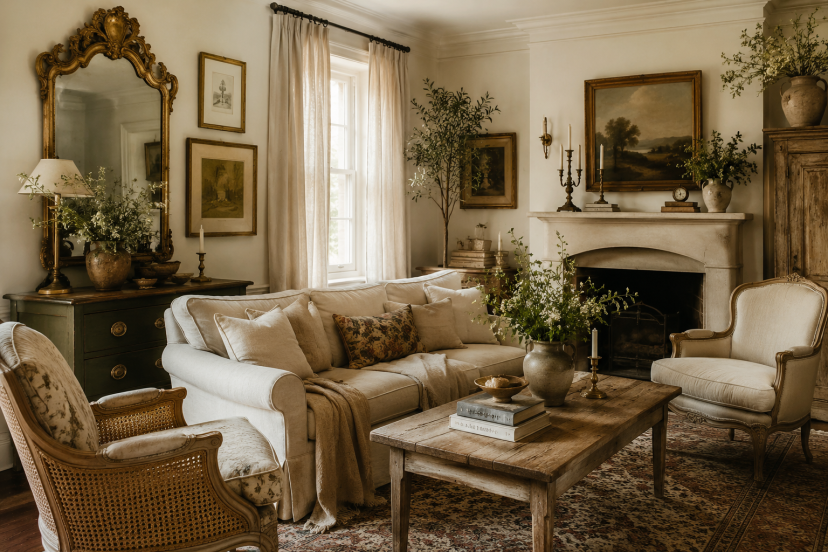
The living room is the perfect place to introduce old-world character. Start with an antique-style rug or a large vintage-inspired mirror. Then add a few warm accents, such as brass candle holders, stacked books, ceramic vases, or framed art.
A linen sofa, wooden coffee table, and classic wall art can create an elegant base. If your room feels too formal, add one relaxed detail, such as a chunky knit throw or slightly imperfect pottery.
The goal is comfort with character.
Bedroom
For the bedroom, keep Vintage European Decor soft and restful. Choose linen bedding, muted florals, carved wood nightstands, vintage-style lamps, or a small gilded mirror.
A European-inspired bedroom should feel calm, not crowded. Use soft colors like cream, oatmeal, dusty rose, pale blue, olive, mushroom, or warm gray.
Rather than covering every surface, choose a few pieces that feel intentional and meaningful. A framed sketch, a ceramic lamp, and a small vase of dried flowers can do more than a dozen random accessories.
Dining Room
Vintage European style works beautifully in dining rooms because it naturally feels gathered and hospitable. Try candlesticks, a linen table runner, antique-style plates, a rustic wood table, or a classic landscape print.
You can also mix old and new dining chairs. This creates that charming European farmhouse feeling without making the space look too perfect.
For a simple centerpiece, place a ceramic bowl filled with pears, lemons, artichokes, or seasonal greenery. It feels effortless but still thoughtful.
Kitchen
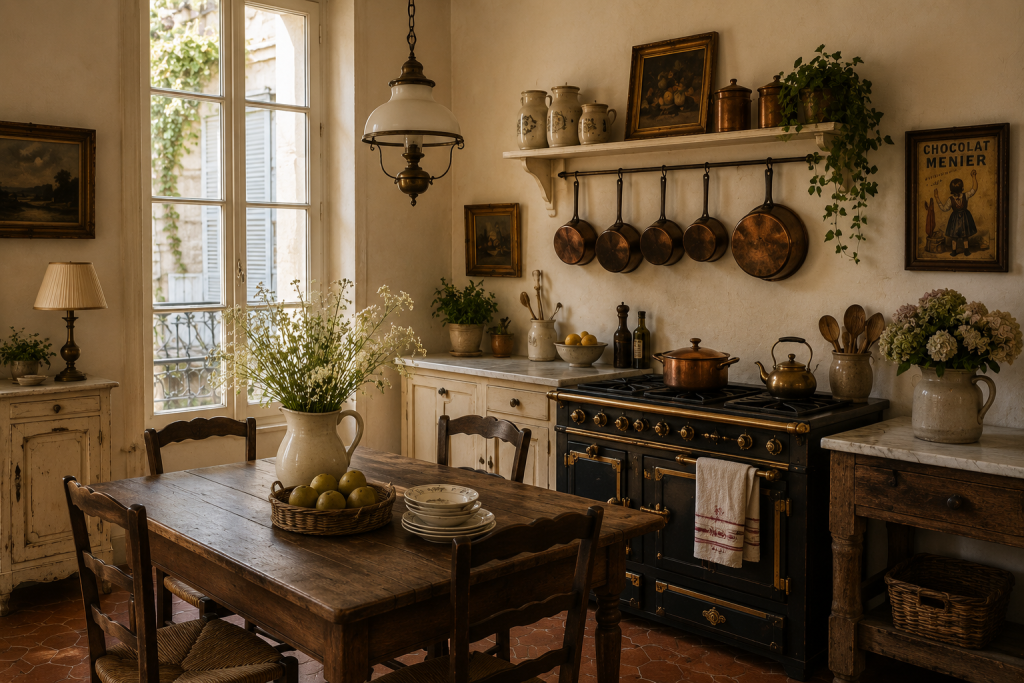
In the kitchen, use Vintage European Decor in practical ways. Open shelving with ceramic bowls, copper pans, glass jars, wood cutting boards, and linen towels can add beauty without wasting space.
Avoid cluttering counters with pieces you never use. A European-inspired kitchen often feels charming because everyday items look beautiful.
Choose function first. Then make it pretty.
Bathroom
A small bathroom can feel instantly elevated with a vintage mirror, brass hardware, wall sconce, framed artwork, or a small wooden stool.
If your bathroom feels too modern, add warmth through texture. Try a woven basket, stone soap dish, linen hand towel, or antique-style tray.
Even tiny details can make the room feel more thoughtful.
Entryway
Your entryway sets the tone for the whole home. A narrow console table, vintage mirror, wall hooks, aged brass tray, and small lamp can create a warm welcome.
If the space is small, keep it simple. A mirror, a bowl for keys, and one framed print may be enough.
Why Vintage European Decor Feels So Timeless
Trends come and go, but vintage European style sticks around because it feels personal, warm, and lived-in. It uses materials, shapes, and details that have already aged well.
Research on how heritage places support wellbeing found that historic environments can strengthen memory, identity, and emotional connection. Another study on how interior design affects psychological wellbeing shows that layout, texture, shape, and atmosphere can influence how comfortable a space feels.
A vintage brass candlestick can add character to a modern table. An ornate mirror can make a plain hallway feel intentional. A framed landscape print can soften a bedroom without overwhelming it.
This style works because it blends beauty with comfort. Weathered wood, woven baskets, linen, old books, muted florals, and ceramic pieces make a room feel elegant without feeling too precious.
Conclusion
Vintage European decor works because it brings comfort, history, and quiet elegance into everyday rooms. With the right mix of aged finishes, classic artwork, soft textures, and thoughtful statement pieces, you can create a home that feels collected instead of crowded. Start small, choose pieces that feel meaningful, and let each room breathe. In the end, the most beautiful vintage-inspired spaces are not perfect. They feel warm, personal, and lived-in.
FAQs
What Is the Vintage European Decorating Style?
This decorating style draws from old-world European interiors, blending classic details with a warm, lived-in feel. It often includes antique-style furniture, ornate mirrors, aged brass, linen fabrics, ceramic vases, classic artwork, carved wood, and soft muted colors.
How do I make my home look European vintage?
Start with one or two statement pieces, such as an ornate mirror, vintage-style rug, or framed landscape print. Then add smaller accents like brass candle holders, linen curtains, ceramic bowls, and antique-style frames.
What colors work best with Vintage European Decor?
Cream, beige, warm white, olive green, dusty blue, burgundy, taupe, mushroom, charcoal, and muted gold all work well. These colors feel soft, timeless, and easy to layer.
Can Vintage European Decor work in a modern home?
Yes. In fact, vintage European pieces often look best when mixed with modern basics. A clean-lined sofa can look warmer with a vintage rug, aged brass lamp, and classic wall art.
What is the easiest Vintage European Decor piece to start with?
An ornate mirror is usually the easiest starting point. It adds charm, reflects light, and works in many rooms, including entryways, bathrooms, bedrooms, and living rooms.