Vintage Leather Banquette Seating In Kitchen Ideas
We may earn a commission for purchases made using our links. Please see our disclosure to learn more.
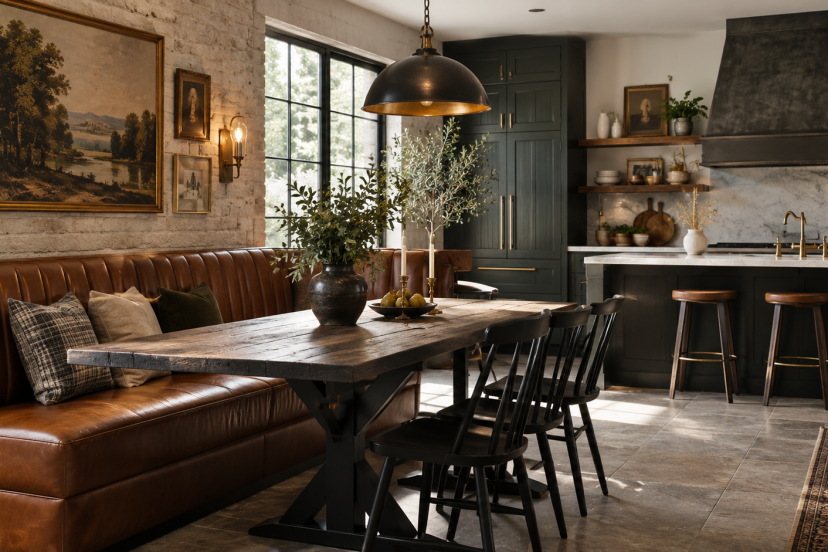
A kitchen banquette can make a room feel instantly more settled. Add aged leather, warm wood, and a table with character, and the space starts to feel less like a newly finished kitchen and more like a favorite corner that has always been there. That is the appeal of leather banquette seating in kitchen design. It combines upholstered comfort with the visual weight of a vintage booth or old café bench, while turning an awkward wall or corner into useful dining space. The trick is balance. The best versions pair vintage character with sensible proportions, durable materials, and enough light to keep the nook inviting.
Why Vintage Leather Works So Well in a Kitchen
Leather adds warmth to kitchens filled with hard surfaces such as stone, tile, metal, and glass. Vintage or vintage-look leather is especially forgiving because creasing, color variation, and small marks can add character instead of making the seat look worn out.
Cognac, tobacco, oxblood, dark brown, and distressed black are classic choices. If you like rooms that feel collected rather than matched, these vintage European decor ideas are a useful reference point. Aged brass, warm timber, old artwork, ceramics, and muted colors all sit naturally beside leather.
Start With the Right Banquette Layout
When planning leather banquette seating in kitchen spaces, start by measuring the wall, table footprint, and walking clearance. The layout depends on where you have usable wall space. A straight banquette works along one wall, while an L-shaped bench turns a corner into a cozy nook. A U-shaped version feels more like a restaurant booth but needs more room.
Before building, mark the bench and table footprint with painter’s tape. Test how easily people can sit, stand, and move around the table.
For a 30-inch-high dining table, the NKBA Kitchen & Bath Planning Guidelines recommend roughly 24 inches of width and 18 inches of knee-space depth for each seated diner. That gives you a useful starting point when checking whether the bench and table will work together.
Choose Leather That Can Handle Everyday Life
In a busy kitchen, the upholstery has to handle crumbs, spills, pets, and repeated use. Protected or finished leather is often easier to live with than delicate unfinished hides because its surface has more protection against everyday mess.
Full-grain and top-grain leather can age beautifully, but ask the upholsterer how the exact finish should be cleaned. If genuine leather sits outside your budget, quality performance vinyl can create a similar booth-style look and may be easier to wipe down.
Always request a sample before committing. Leather can appear much warmer, darker, or redder beside your cabinets and flooring than it does on a screen.
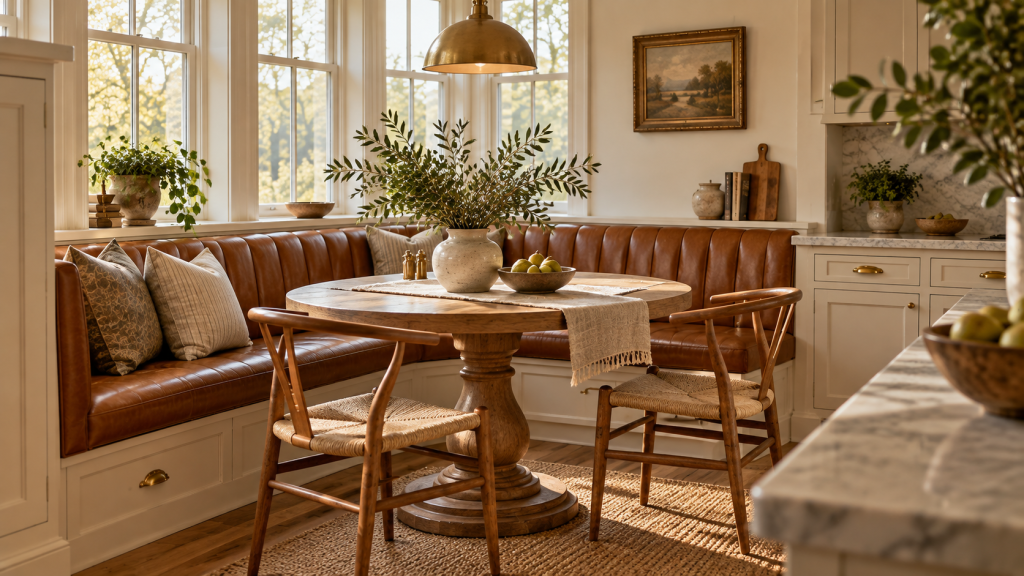
Try a Cognac Leather and Oak Combination
Cognac leather is one of the easiest colors to decorate around because it sits somewhere between orange, brown, and caramel. It looks especially good beside natural oak, cream cabinets, warm white walls, and aged brass.
Keep the bench shape fairly simple and let the leather provide the personality. Channel stitching adds vintage detail without making the seat too formal.
A round pedestal table is a particularly good partner. With no corner legs to bump into, it makes getting in and out of the banquette much easier.
Go Dark and Moody With Chocolate or Oxblood
If your kitchen receives plenty of daylight, deeper leather can look rich rather than heavy. Chocolate brown, espresso, oxblood, and near-black leather pair beautifully with walnut, dark painted cabinetry, marble, and antique brass.
The key is contrast. Pair dark leather with a pale tabletop, light wall, or linen shade so the nook does not turn into one dark visual block.
Oxblood works especially well when you want an old-school atmosphere without literally recreating a diner. Its subtle burgundy tone pairs nicely with olive green, navy, cream, and warm wood.
Use Channel Tufting for a Classic Booth Look
Vertical channel tufting gives leather seating an unmistakable vintage restaurant feel while adding structure to an otherwise plain wall.
Wide channels paired with matte leather tend to feel softer and more residential. Narrow channels and shinier leather create a stronger retro or commercial look.
Button tufting also suits traditional kitchens, but there is one practical drawback: all those little recesses catch crumbs. For everyday family use, simple stitched channels are usually easier to maintain.
Add Storage Without Making the Seat Clumsy
Banquettes take up useful floor space, so adding storage underneath can make sense. Deep drawers are often easier to use than lift-up lids because you do not have to remove cushions whenever you need something.
Use the space for serving platters, seasonal linens, occasional appliances, or extra tableware rather than items you reach for several times a day.
In a smaller kitchen, be careful not to make the storage base so bulky that it reduces comfortable legroom. Measure the entire seating area before the cabinetmaker starts building.
Pay Attention to Comfort, Not Just Looks
A beautiful banquette can still fail if its seat feels too high, deep, or upright.
Use a dining chair you already find comfortable as a reference. Measure its finished seat height and usable depth, then compare those measurements with your proposed bench. Remember that thick upholstery foam compresses once someone sits on it.
Research into furniture ergonomics supports the importance of matching furniture dimensions to the people using it. An anthropometric furniture-fit study found measurable mismatches between people’s body dimensions and fixed furniture sizes, reinforcing the broader point that comfortable seating cannot rely on appearance alone. The study concerned university furniture rather than kitchen banquettes, so it should be treated as supporting ergonomic evidence rather than a banquette-specific sizing guide.
If household members vary greatly in height, build a temporary mock-up before ordering the upholstery. Even a small change in size can have a big impact on comfort.
Recommended Products
Leather Honey Leather Conditioner
Leather Honey Leather Conditioner is designed for leather items including furniture. Use it only if your upholstery maker recommends conditioning, and always test a hidden section first. The manufacturer specifically notes that it should not be used on suede, faux leather, or vinyl.
Weiman Leather Cleaner and Conditioner
Weiman Leather Cleaner and Conditioner is a practical option for routine furniture care. It cleans and conditions leather and is marketed with UV protectants intended to help reduce cracking or fading, which may be useful for seating positioned near sunny windows.
Lexol Deep Leather Conditioner
Lexol Deep Leather Conditioner is intended for leather upholstery and other leather goods. It makes more sense for periodic conditioning than major restoration work, and your upholstery manufacturer’s instructions should always take priority.
Scotch Felt Pads
Scotch Felt Pads can protect finished flooring beneath movable dining chairs, pedestal tables, or freestanding bench components. The self-stick felt also helps furniture move without dragging directly across the floor.
STANLEY PowerLock Tape Measure
A tape measure may be the least decorative purchase on this list, but it can prevent some expensive mistakes. The STANLEY PowerLock lets you check wall length, bench width, table clearance, and walking space before committing to cabinetry or upholstery.
Finish the Nook With Vintage Details
Once the banquette is installed, resist decorating every inch around it. Leather already has plenty of visual presence. Pairing leather banquette seating in kitchen designs with warm wood, aged brass, and soft lighting creates a more inviting vintage feel.
A framed landscape, aged brass sconce, striped cushion, vintage runner, or ceramic vase may be enough. If the leather itself is heavily distressed, keep the table and lighting a little cleaner so the kitchen feels collected rather than themed.
A pendant centered over the table can visually define the nook, while a small wall sconce creates a more intimate atmosphere in the evening. Warm light is especially flattering beside cognac, tobacco, and oxblood leather.
Conclusion
Vintage leather banquette seating in kitchen design works best when comfort comes first and decoration follows. Start with a layout that gives diners enough knee room and leaves sensible circulation around the table. Then choose leather that suits the way your household actually lives and use color, stitching, timber, lighting, and a few vintage details to give the nook character. You do not need an elaborate restaurant-style installation to achieve the look. Even a simple cognac leather bench against a warm wall can turn an overlooked kitchen corner into the place everyone naturally wants to sit.
FAQs
Is leather a good material for a kitchen banquette?
Yes, particularly when you choose finished leather intended for furniture. It can be durable, relatively easy to wipe, and attractive as it develops character. Follow the cleaning instructions for your specific hide and finish.
What color leather works best in a vintage kitchen?
Cognac and tobacco are easy to combine with warm woods and neutral cabinets. Dark brown, oxblood, and black create a moodier look and work particularly well when the kitchen has plenty of natural light.
Should a kitchen banquette have a straight or angled back?
A slightly angled or cushioned back often feels more comfortable than a completely vertical surface. The ideal setup depends on cushion thickness, seat depth, and how upright you prefer to sit, so testing a mock-up helps.
Can I put storage under leather banquette seating?
Absolutely. Drawers are especially convenient because you can reach the contents without lifting the seat cushions. Reserve the space for items you do not need constantly.
How do I keep a leather banquette from looking too heavy?
Balance the leather banquette seating in kitchen with lighter and softer materials. Pale walls, natural wood, linen window treatments, a light tabletop, or warm metal accents can keep dark leather from dominating the kitchen.